EDI Ultrapure Water Equipment: Features, Process Flow, and Applications Guide (2026 Updated)
EDI (Electrodeionization) ultrapure water equipment represents the latest generation of high-purity water production technology, combining reverse osmosis (RO) with electrodeionization to continuously produce ultrapure water at 15-18.2 MOhm-cm without chemical regeneration. Unlike traditional mixed-bed systems, EDI equipment offers fully automated operation, zero chemical handling, and consistent water quality around the clock. Xi’an CHIWATEC has been engineering and manufacturing EDI ultrapure water equipment for industrial, pharmaceutical, and electronics applications since 2012.
*Last Updated: March 2026
Why This Guide Matters
The global EDI equipment market was valued at approximately USD 1.8 billion in 2025 and is projected to reach USD 3.5 billion by 2035, growing at a CAGR of 6.8% (Grand View Research, 2025). EDI equipment has become the preferred technology for new ultrapure water system installations, with over 70% of new pharmaceutical and electronics facilities choosing RO + EDI over RO + mixed bed configurations. The key drivers include: elimination of hazardous chemical handling (HCl, H2SO4, NaOH), 30-50% lower operating costs, 85-95% water recovery rates, and the ability to achieve 18.2 MOhm-cm water quality consistently. Understanding the features, process flows, and application scope of EDI ultrapure water equipment is essential for engineers and facility managers planning new installations or retrofitting existing systems.
Key Industry Trends (2026 Update)
- Third-generation EDI modules: New EDI module designs incorporate advanced ion-exchange membranes with 20-30% higher ion transfer efficiency, reducing DC power consumption to 0.15-0.30 kWh per cubic meter of product water.
- High-recovery EDI configurations: Modern EDI systems with concentrate recirculation achieve 95-97% water recovery, compared to 85-90% for conventional designs, significantly reducing wastewater volumes in water-scarce regions.
- Integrated RO-EDI skid systems: Manufacturers now offer pre-engineered, factory-tested RO-EDI skids that reduce on-site installation time by 40-60% and eliminate integration risks between the RO and EDI stages.
- Remote monitoring and predictive maintenance: IoT-enabled EDI equipment with cloud-based monitoring platforms allows real-time performance tracking, automated cleaning alerts, and predictive module replacement scheduling based on actual operating data rather than fixed time intervals.
1. What Are the Key Features of EDI Ultrapure Water Equipment?
System Architecture
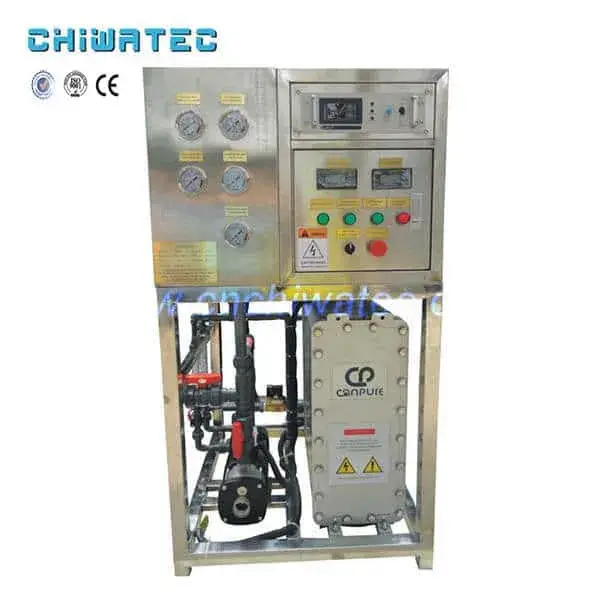
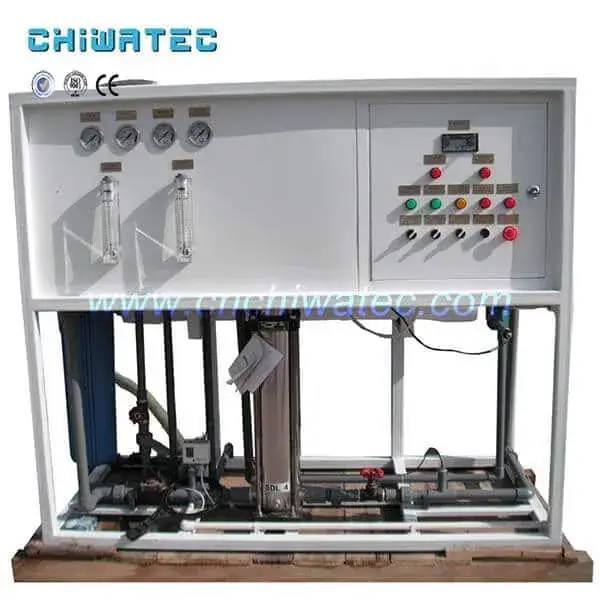
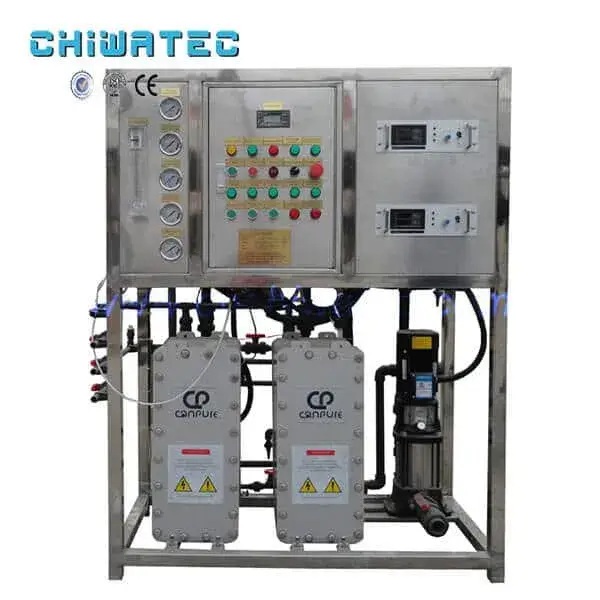
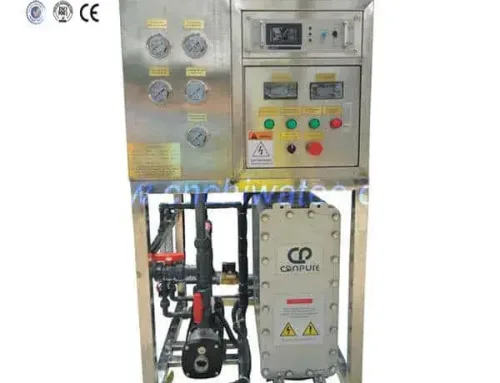
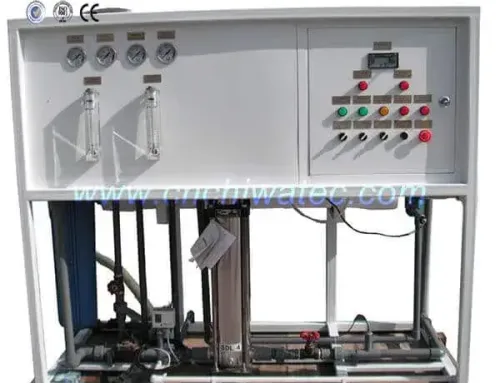
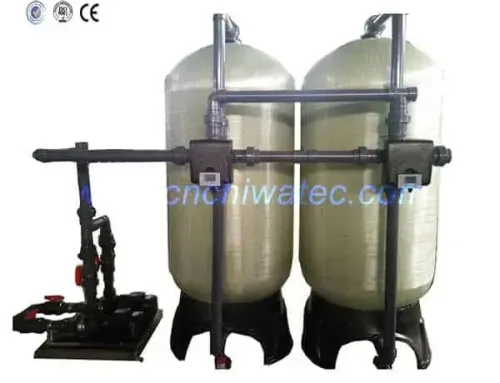
EDI ultrapure water equipment consists of an integrated multi-stage treatment train designed to produce consistent high-purity water from municipal tap water or well water sources. The complete system includes: a pretreatment system (multi-media filter, activated carbon filter, sodium ion softener, and precision filter), an RO reverse osmosis host system, and an EDI electric desalination system. All water tanks in the system (raw water, intermediate, RO permeate, and ultrapure water storage) are equipped with liquid level control systems for automated fill and drain operation.
Automation and Instrumentation
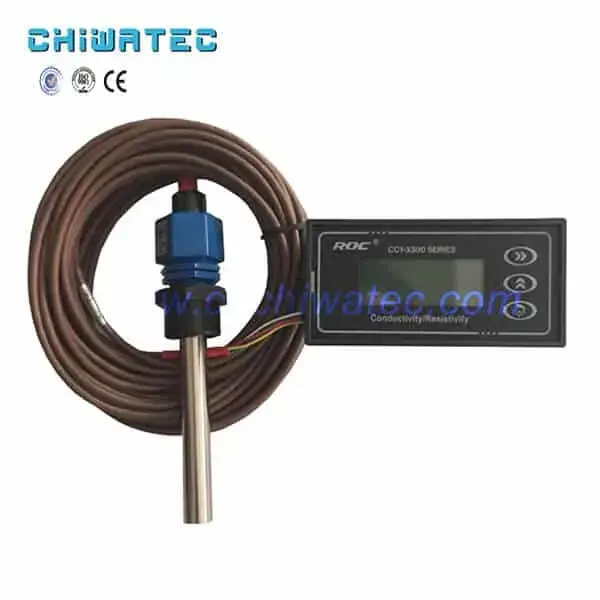
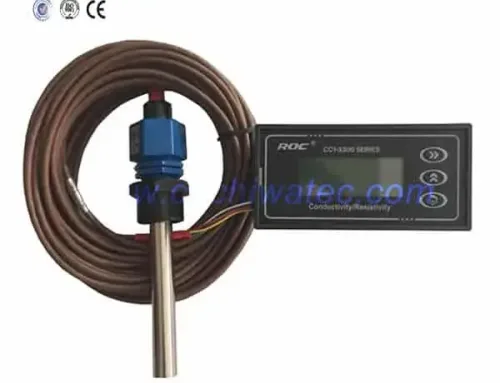
All water pumps in the system are equipped with high and low pressure protection devices. Online water quality detection instruments continuously monitor product water resistivity, conductivity, and temperature. The electrical system uses a PLC (Programmable Logic Controller) for fully unattended operation. The control system provides: automatic start/stop sequencing, alarm notification for quality deviations, data logging for compliance documentation, and remote monitoring capability. CHIWATEC customizes each EDI equipment control system to match the specific operational requirements and facility integration needs.
Material Quality and Reliability
EDI equipment components are selected for long service life and low maintenance. The process design follows customer recommendations and industry best practices to ensure the highest cost-performance ratio compared with other similar products. Piping materials are selected to prevent leaching and maintain water quality — typically UPVC, PVDF, or 316L stainless steel for ultrapure water sections. All pressure vessels, valves, and instruments are specified for 24/7 continuous operation with minimal operator intervention.
2. What Is the Traditional EDI Process Flow?
RO + Mixed Bed Configuration
The traditional EDI-compatible process flow using a mixed bed configuration is: pretreatment system to reverse osmosis system to intermediate water tank to coarse mixed bed to fine mixed bed to pure water tank to pure water pump to ultraviolet sterilizer to polished mixed bed to precision filter (0.2-0.5 micron) to water point. This configuration achieves water quality of 18 MOhm-cm or higher, meeting the requirements of most industrial and laboratory applications.
Limitations of the Mixed Bed Approach
While the RO + mixed bed process can achieve excellent water quality, it has several drawbacks: periodic chemical regeneration with acid and caustic, generation of acidic and alkaline wastewater requiring neutralization, quality variation between regeneration cycles, and higher labor costs for regeneration management. These factors have driven the industry toward EDI as a replacement for mixed bed technology.
3. What Is the Modern RO + EDI Process Flow?
Standard RO + EDI Configuration
The modern process flow using EDI is: pretreatment to reverse osmosis to intermediate water tank to water pump to EDI device to purified water tank to pure water pump to ultraviolet sterilizer to polished mixed bed (optional polishing stage) to 0.2 or 0.5 micron precision filter to water point. This configuration consistently achieves water quality of 18 MOhm-cm or higher without chemical regeneration. The EDI module operates continuously, and the polished mixed bed (if included) serves as a final polishing step with regeneration intervals of 6-12 months or longer.
Two-Pass RO + EDI for High-Purity Applications
For applications requiring the highest purity with TOC below 2 ppb and resistivity at 18.2 MOhm-cm, a two-pass RO configuration is recommended: pretreatment to first-stage RO to dosing machine (pH adjustment) to intermediate water tank to second-stage RO (with positively charged RO membrane) to pure water tank to pure water pump to EDI device to ultraviolet sterilizer to 0.2 or 0.5 micron precision filter to water point. The second-pass RO typically achieves water quality of 17 MOhm-cm or higher before the EDI stage.
4. What Are the Three Common EDI Process Configurations?
Process Comparison Table
| Configuration | Process Flow | Achievable Quality | Best For |
|---|---|---|---|
| RO + EDI (Standard) | Pre-Ro-Pump-EDI-UV-Polish-Filter-POU | >= 15 MOhm-cm | General industrial, boiler feed, lab |
| RO + EDI + Polish MB | Pre-Ro-Pump-EDI-Tank-UV-Polish MB-Filter-POU | >= 18 MOhm-cm | Pharmaceutical, electronics |
| 2-Pass RO + EDI | Pre-RO1-Dosing-RO2-EDI-UV-Filter-POU | >= 18.2 MOhm-cm | Semiconductor, high-purity pharma |
Selecting the Right Configuration
The choice between these configurations depends on the target water quality, feed water quality, and budget. For most applications, the standard RO + EDI configuration with a polished mixed bed provides the best balance of cost and performance. For semiconductor fabs and advanced pharmaceutical applications requiring absolute 18.2 MOhm-cm with TOC below 2 ppb, the two-pass RO + EDI configuration is recommended.
5. What Industries Use EDI Ultrapure Water Equipment?
Microelectronics and Semiconductor Industry
EDI ultrapure water equipment is extensively used in: electrolytic capacitor production requiring high-purity rinse water, electron tube and CRT/cathode ray tube manufacturing, LCD (liquid crystal display) production for glass substrate cleaning, transistor and integrated circuit fabrication requiring 18.2 MOhm-cm water, and electronic new material production processes. The microelectronics industry represents the largest market segment for EDI equipment due to its stringent water quality requirements and high-volume consumption.
Pharmaceutical and Biotechnology Industry
Pharmaceutical manufacturers use EDI equipment to produce purified water (PW) and as feed water for water for injection (WFI) systems. The EDI process reliably meets USP <1231> conductivity specifications without chemical addition. Applications include: oral liquid production, sterile medical water preparation, fermentation media preparation, and clean-in-place (CIP) system feed water.
Chemical and Fine Chemical Industry
The chemical industry uses EDI ultrapure water for: production of ultra-pure chemical reagents, new chemical material synthesis, catalyst preparation requiring high-purity water, and analytical laboratory feed water for sensitive instrumentation including ICP-MS, HPLC, and IC.
Specialty Applications
Additional applications of EDI equipment include: precious metal smelting and refining, magnetic material production requiring high-purity rinse water, electronic-grade clean room fabric production, optical material manufacturing where surface contamination cannot be tolerated, and battery/power cell electrolyte production requiring ultra-low conductivity water.
6. What Components Make Up an EDI Ultrapure Water System?
Pretreatment Components
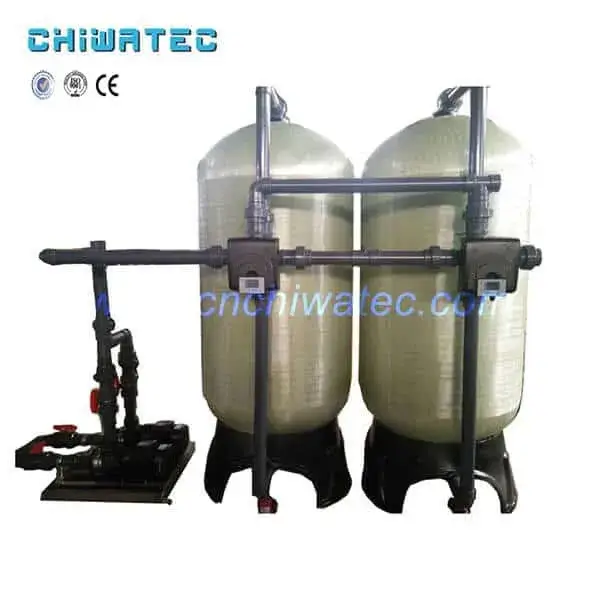
The pretreatment system includes: a raw water storage tank with float level control, a multi-media filter (graded sand and anthracite) for removing suspended solids to 10-25 microns, an activated carbon filter for chlorine and organic removal (typically 5-10 minute EBCT), a sodium ion softener for hardness removal to below 0.5 ppm as CaCO3, and a precision (cartridge) filter at 1-5 microns as the final barrier before RO. An antiscalant dosing system is included when feed water has high scaling potential (LSI above 1.8).
RO and EDI Core Components
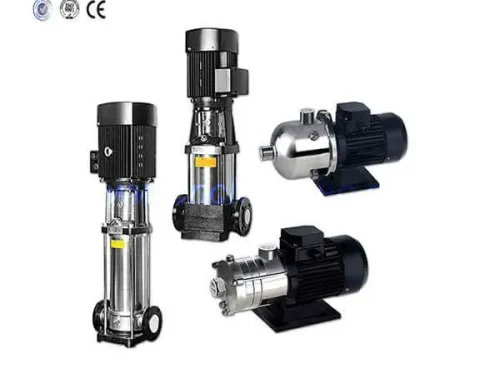
The RO system includes: high-pressure pump (typically 1.0-2.0 MPa / 145-290 psi), spiral-wound RO membrane elements in FRP pressure vessels, automatic flush valves for periodic membrane cleaning, and permeate and concentrate flow meters with conductivity monitoring. The EDI module includes: electrodeionization stacks with mixed-bed resin chambers and ion-selective membranes, DC rectifier power supply, concentrate recirculation pump (for high-recovery systems), and product water resistivity sensor with analog output.
Polishing and Distribution Components
After the EDI module, the system typically includes: an ultraviolet (UV) sterilizer (254 nm for bacteria control, 185 nm for TOC reduction), a polished mixed bed (for final trace ion polishing where 18.2 MOhm-cm is required), a 0.2 or 0.5 micron final precision filter for particle removal, and a pressurized distribution loop with constant pressure control to deliver ultrapure water to point-of-use locations.
7. How to Automate an EDI Ultrapure Water System?
PLC Control Functions
A well-designed EDI equipment control system provides: automatic raw water pump start/stop based on tank levels, programmed backwash cycles for multi-media and activated carbon filters, softener regeneration based on volume or time, RO system start/stop with low-pressure protection, automatic RO membrane flush on start-up and shutdown, EDI module voltage and current control based on product water quality, UV sterilizer interlock with flow switch, and comprehensive alarm management for quality and equipment faults.
Monitoring and Data Logging
Online instruments continuously measure and log: feed water conductivity, RO permeate conductivity and flow, EDI product water resistivity, product water TOC (optional), system pressures at each stage, tank levels, and pump status. Data logging systems with Ethernet connectivity allow integration with plant SCADA systems and provide trending capability for performance optimization.
8. How Does EDI Equipment Compare to Traditional Mixed-Bed Systems?
Operational Comparison
EDI equipment operates continuously without regeneration shutdowns, producing consistent water quality 24/7. Mixed-bed systems require periodic offline regeneration, during which product water quality degrades. EDI eliminates chemical handling — no acid (HCl, H2SO4) or caustic (NaOH) storage, no regeneration wastewater requiring neutralization. Operating costs for EDI are 30-50% lower than mixed-bed systems on a per-cubic-meter basis when chemical, labor, and waste disposal costs are included.
Water Quality Consistency
EDI equipment maintains stable product water quality regardless of operating time since the last regeneration cycle. Mixed-bed systems show a characteristic quality curve — excellent quality immediately after regeneration, gradual degradation as resin capacity is consumed, and a sharp quality drop at exhaustion. For critical processes requiring consistent 18.2 MOhm-cm water, EDI provides significantly better quality assurance.
9. How to Maintain EDI Ultrapure Water Equipment?
Routine Maintenance Tasks
Daily checks: verify product water resistivity (target above 15 MOhm-cm), check module voltage and current, inspect feed water conductivity, review alarm logs, and verify chemical dosing levels (antiscalant, reducing agent). Weekly tasks: record and trend system performance data, calibrate online conductivity/resistivity instruments using standard solutions, and inspect pretreatment system pressure differentials.
Periodic Maintenance Schedule
EDI module chemical cleaning is recommended every 6-18 months, depending on feed water quality and operating conditions. Standard cleaning uses: low-pH acid (0.5-2% HCl or citric acid) for hardness scale removal, high-pH caustic (0.5-1% NaOH) for organic and silica fouling removal, and sanitization with hydrogen peroxide or peracetic acid for biological control. RO membrane cleaning is typically needed every 3-12 months. Activated carbon replacement should be scheduled annually, or more frequently if chlorine breakthrough is detected.
10. How to Select the Right EDI Ultrapure Water Equipment?
Capacity and Quality Requirements
Begin by establishing the required product water quality (resistivity in MOhm-cm, TOC in ppb, silica in ppb) and peak flow rate (m3/h or GPM). Add 20-30% capacity margin for future expansion. For systems requiring 18.2 MOhm-cm, include a polished mixed bed after the EDI module. For TOC-sensitive applications, include a 185 nm UV sterilizer and specify low-TOC EDI module materials.
Feed Water Assessment
A comprehensive feed water analysis is essential: conductivity, hardness, alkalinity, silica, TOC, chlorine, iron, manganese, and CO2 levels all affect system design. If feed water has high hardness (> 100 ppm as CaCO3), consider anti-scalant dosing or a dual-stage softening approach. If TOC exceeds 2 ppm, specify improved RO pretreatment with higher rejection membranes. CHIWATEC engineering team provides complete system sizing, configuration selection, and design services based on site-specific water analysis and production requirements.
Conclusión
EDI ultrapure water equipment represents the modern standard for high-purity water production, offering fully automatic operation, zero chemical handling, and consistent water quality of 15-18.2 MOhm-cm. From the standard RO + EDI configuration to the advanced two-pass RO + EDI process for semiconductor-grade applications, EDI equipment provides a reliable, cost-effective, and environmentally sustainable solution for ultrapure water needs across the microelectronics, pharmaceutical, chemical, and specialty industries. Contact Xi’an CHIWATEC today at [email protected] o [email protected] to discuss your EDI ultrapure water equipment requirements and system configuration needs.
Frequently Asked Questions
Q1: What is the difference between EDI equipment and traditional mixed-bed deionizers?
The key difference is regeneration method. EDI equipment uses continuous electric regeneration — the DC field splits water molecules into H+ and OH- ions that continuously restore resin capacity — while mixed-bed deionizers require periodic chemical regeneration with acid and caustic. EDI eliminates chemical handling, produces no acidic/alkaline wastewater, and operates continuously without regeneration shutdowns.
Q2: What water quality can EDI ultrapure water equipment achieve?
Standard EDI equipment consistently produces water with resistivity of 15-18.2 MOhm-cm, conductivity below 0.1 microSiemens/cm, and silica below 5 ppb. With a polished mixed bed after the EDI module, the system can achieve 18.2 MOhm-cm reliably. With a two-pass RO configuration before EDI, TOC levels below 2 ppb can be maintained.
Q3: How much does EDI equipment cost to operate?
Typical EDI operating costs range from USD 0.15 to 0.50 per cubic meter of product water, including electricity for the DC rectifier and feed pumps, periodic cleaning chemicals, and annual maintenance. This is 30-50% lower than the operating cost of RO + mixed bed systems, which typically cost USD 0.30-1.00 per cubic meter when chemical and waste disposal costs are included.
Q4: How long do EDI modules last before replacement?
With proper pretreatment and regular maintenance, EDI modules typically last 3-7 years. Factors affecting lifespan include: feed water quality (hardness and silica levels are critical), operating voltage and current settings, cleaning frequency and effectiveness, and the number of start-stop cycles. Some well-maintained installations report module life exceeding 10 years.
Q5: Can existing RO + mixed bed systems be converted to EDI?
Yes. Retrofitting an existing RO + mixed bed system with EDI modules involves: removing the mixed bed vessels, installing EDI stacks with a DC rectifier and control system, and reconfiguring the piping. The existing RO system must provide feed water meeting EDI inlet specifications (conductivity below 20 microSiemens/cm). The retrofit payback period is typically 1-3 years based on chemical savings alone.
Related Resources and Further Reading
¿Tiene un proyecto de tratamiento de agua con el que podamos ayudar?
* Diseño, mecanizado, instalación, puesta en marcha, personalización y servicio integral

 Spanish
  English
  Portuguese