Water Pretreatment Filter System: Complete Guide to RO Pretreatment Equipment and Applications 2026
Why is pretreatment filtration essential for reverse osmosis systems? A well-designed water pretreatment filter system is the most critical line of defense for protecting RO membranes from fouling, scaling, and mechanical damage. This comprehensive guide covers pretreatment filter equipment types — including multi-media filters, activated carbon filters, and cartridge filters — their application scope across industries, and best practices for system design and operation. CHIWATEC has been engineering industrial water pretreatment filter system solutions for over a decade, ensuring reliable RO system performance across diverse feedwater conditions.
*Last Updated: March 2026 | Industry-Verified Technical Data*
Why This Guide Matters
Proper pretreatment is the single most important factor in determining RO membrane lifespan and system reliability. Industry data shows that 60-70% of premature RO membrane failures are directly attributable to inadequate or improperly designed pretreatment systems. The global water filtration equipment market was valued at approximately USD 32.5 billion in 2025 and is projected to reach USD 58.7 billion by 2034, growing at a CAGR of 6.8% (Fortune Business Insights, 2025). Of this, pretreatment filtration for membrane systems represents a significant and growing segment. Understanding the different types of pretreatment filter equipment, their application scope, and proper sizing criteria is essential for any water treatment professional involved in RO system design or operation.
Key Industry Trends (2026 Update)
- Integrated pretreatment skids: Factory-assembled, pre-piped pretreatment systems combining coagulation, media filtration, and cartridge filtration on a single skid are increasingly preferred for reduced installation time and simplified system integration.
- Self-cleaning filter technology: Automatic self-cleaning disc and screen filters with backwash triggered by differential pressure are replacing manual cartridge filters in many industrial applications, reducing operator attention requirements by 80-90%.
- Membrane-based pretreatment (UF/MF): Ultrafiltration and microfiltration are increasingly used as RO pretreatment for challenging feedwaters (high SDI, high turbidity, wastewater), providing consistently low SDI (<2) regardless of feedwater quality fluctuations.
- Smart filter monitoring: IoT-enabled filter vessels with real-time differential pressure monitoring, automatic backwash optimization, and predictive media replacement alerts are reducing maintenance costs by 25-40%.
1. What Is a Water Pretreatment Filter System for RO?
Definition and Purpose
A water pretreatment filter system is a series of filtration equipment installed upstream of the RO membrane system, designed to remove suspended solids, colloidal particles, free chlorine, organic matter, and other contaminants that would otherwise foul or damage the RO membranes. The primary objectives of pretreatment filtration are to reduce the Silt Density Index (SDI) to below 3.0 (ideally below 2.0), remove particles larger than 5-10 microns, eliminate free chlorine and other oxidizing agents, and reduce organic loading to minimize biofouling potential. Without adequate pretreatment, RO membranes can experience irreversible fouling within weeks, requiring premature replacement that costs 2-5 times the investment in proper pretreatment equipment.
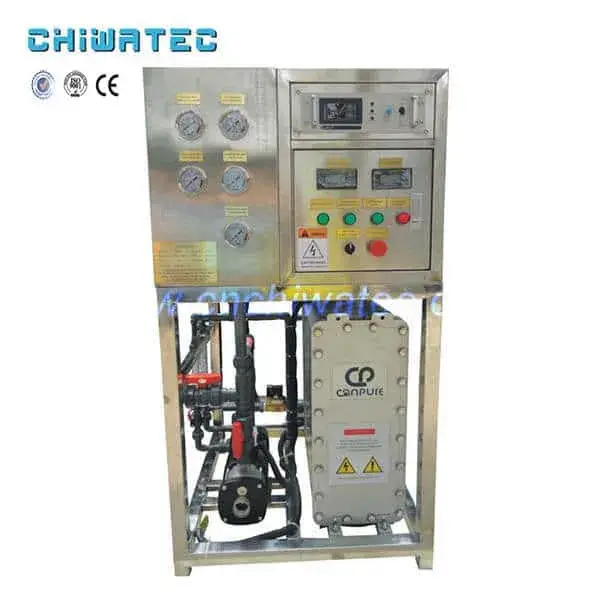
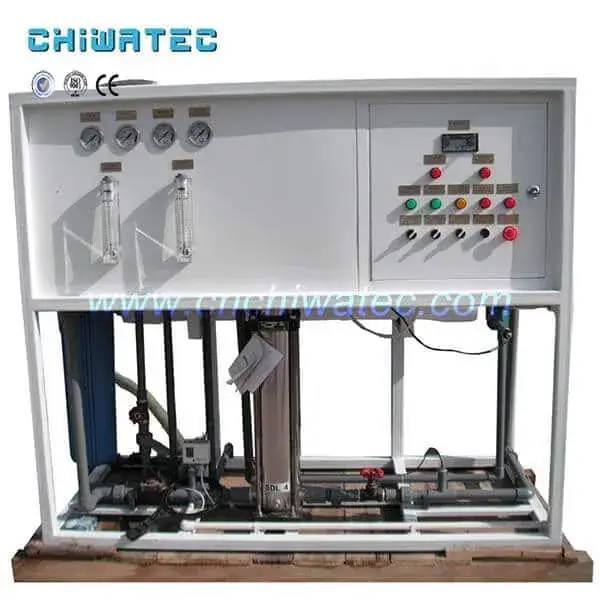
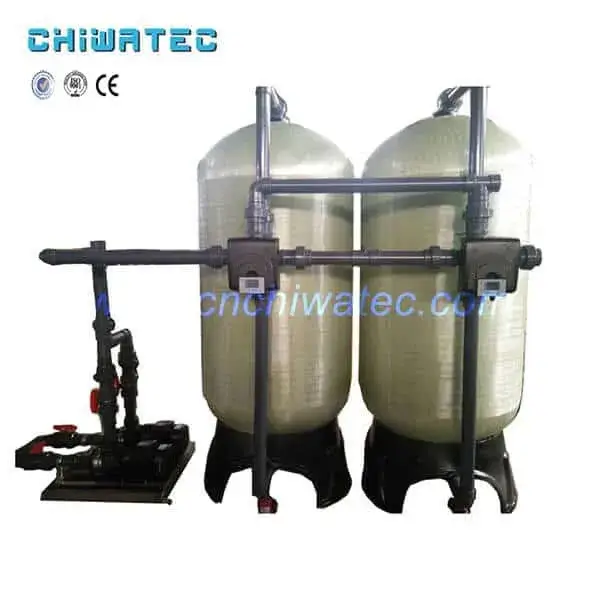
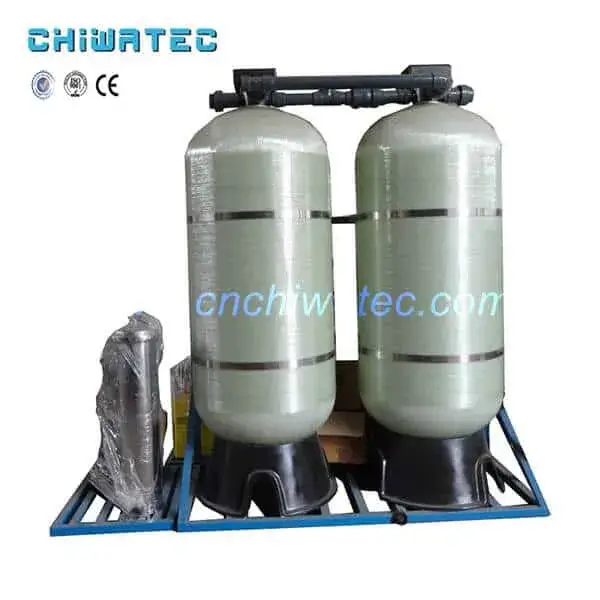
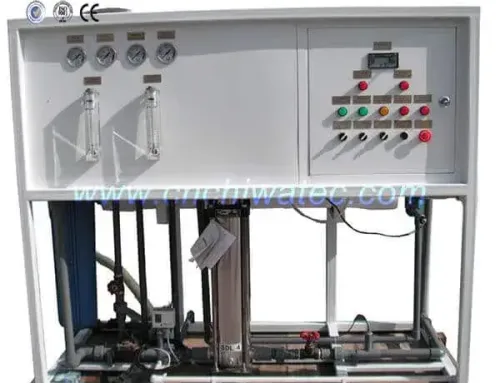
CHIWATEC offers a complete range of water pretreatment filter system designed for commercial and industrial RO applications.
2. What Types of Filter Equipment Are Used in Pretreatment Systems?
Primary Filter Types
Industrial RO pretreatment systems typically incorporate a combination of the following filter types, arranged in sequence from coarse to fine filtration:
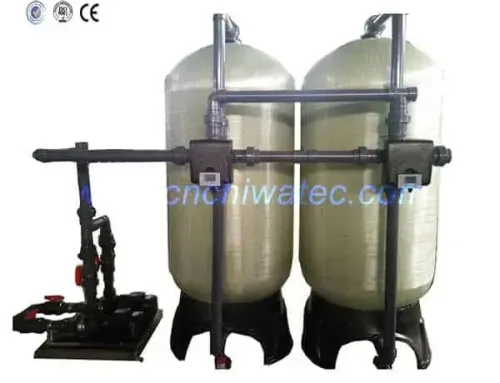
- Multi-media filters (MMF): Pressure vessels containing graduated layers of filter media — typically anthracite (top layer, 0.8-1.2 mm), sand (middle layer, 0.4-0.6 mm), and garnet or gravel (bottom layer, 1-3 mm). MMF removes suspended solids down to 10-25 microns and can reduce SDI from 5-15 to 3-5. They are the workhorse of industrial pretreatment systems.
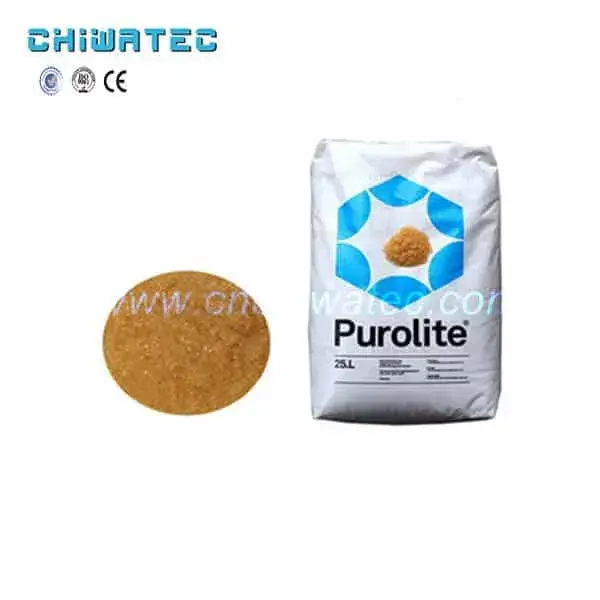
- Activated carbon filters (ACF): Vessels containing granular activated carbon (GAC) media that remove free chlorine, chloramines, organic compounds, taste, and odor through adsorption. Free chlorine removal is critical for protecting polyamide RO membranes, which have a maximum tolerance of 0.1 ppm. ACF also reduces TOC and NOM that contribute to biofouling.
- Cartridge filters (bag filters): Final polishing filters with replaceable 5-10 micron absolute-rated cartridges. They capture any media fines or particulates that break through upstream filters and serve as the last line of defense before the RO membranes.
- Disk filters: Composed of stacked grooved disks that create a three-dimensional filtration matrix. Suitable for applications with high suspended solids loading, offering automatic backwash and filtration down to 20-100 microns.
- Greensand filters: Specialized filters using manganese greensand media for iron and manganese removal through oxidation and filtration, essential for well water applications with elevated iron concentrations.
3. What Is the Application Scope of Pretreatment Filter Equipment?
Industries and Applications
Pretreatment filter equipment is applicable across virtually every industry that requires treated water. The application scope includes:
- Steel and metallurgy: Cooling water filtration, descaling water treatment, and process water for continuous casting operations.
- Petroleum and petrochemical: Injection water for enhanced oil recovery, refinery process water, cooling tower makeup, and produced water treatment.
- Chemical processing: Process water, reactor cooling, product washing, and wastewater treatment.
- Electronics and semiconductor: Ultrapure water pretreatment — dual-media filtration followed by activated carbon and cartridge filtration before RO/EDI systems.
- Textile and dyeing: Process water for dyeing, bleaching, and finishing operations.
- Paper and pulp: Process water, boiler feedwater, and wastewater treatment.
- Food and beverage: Process water, ingredient water, bottle washing, and CIP systems.
- Municipal water supply: Surface water and groundwater treatment for drinking water production.
- Wastewater regeneration and reuse: Tertiary filtration of municipal and industrial effluent for non-potable reuse.
- Agriculture and irrigation: Drip irrigation, sprinkler irrigation, and greenhouse water supply.
Pretreatment filters can handle various water sources including river water (removing sand, algae, bacteria, organic matter), reservoir water, well water, and underground water sources. They are also widely used in equipment protection applications — installed on supply and drainage pipelines upstream of water pumps, solenoid valves, ion exchangers, and heat exchangers to filter impurities and prevent clogging of pipelines, nozzles, and other components. Additional applications include cooling water and cooling tower systems, air conditioning makeup water, and gravity-flow filtration systems.
4. What Water Sources Can Pretreatment Filters Handle?
Feedwater Source Capabilities
Industrial pretreatment filter systems are designed to handle diverse water sources, each with characteristic contaminants that must be addressed:
- River water: Seasonal variations in turbidity (10-500 NTU), suspended solids, organic matter, and microbial content. Requires robust multi-media filtration with coagulant dosing capability for high-turbidity events.
- Reservoir water: Lower turbidity than river water (2-20 NTU) but higher algae and organic content. Pre-chlorination or pre-oxidation may be needed to control biological growth.
- Well water: Low turbidity and SDI but potential for dissolved iron, manganese, hydrogen sulfide, and hardness. Greensand filtration for iron/manganese removal, aeration for H2S stripping are common additions.
- Municipal water: Relatively consistent quality with chlorine residual, low turbidity (<1 NTU), but possible organic and TDS variability. Activated carbon filtration is essential for chlorine removal.
- Seawater: High SDI (5-20), high turbidity during storms, algae blooms, and marine organisms. Media filtration with coagulant is standard, followed by cartridge filtration.
- Wastewater effluent: Highly variable quality with high SDI, organic loading, and biological content. Typically requires UF or advanced treatment before RO.
5. How Does a Multi-Media Filter Work?
Filtration Mechanism and Media Design
Multi-media filtration operates on the principle of depth filtration, where suspended particles are captured throughout the filter bed rather than only on the surface. The graded media layers are designed with coarser, lighter media on top and finer, denser media at the bottom:
- Anthracite layer (top, 18-24 inches): Coarse anthracite coal (specific gravity 1.4-1.6, effective size 0.8-1.2 mm) captures larger suspended particles (50-100 microns) and distributes flow across the filter surface.
- Sand layer (middle, 12-18 inches): Silica sand (specific gravity 2.6-2.7, effective size 0.4-0.6 mm) captures medium-sized particles (25-50 microns).
- Garnet layer (bottom, 4-8 inches): High-density garnet (specific gravity 4.0-4.2, effective size 0.2-0.4 mm) provides final polishing, capturing fine particles down to 10-25 microns.
During filtration, water flows downward through the media bed. When the differential pressure reaches 10-15 psi or a preset runtime has elapsed, the filter is backwashed — water flows upward at sufficient velocity (15-20 gpm/ft2 for 50% bed expansion) to fluidize and clean the media.
6. What Is the Role of Activated Carbon Filtration in Pretreatment?
Adsorption Mechanisms
Activated carbon filters serve multiple critical functions in RO pretreatment. The high internal surface area of GAC (500-1,500 m2 per gram) provides exceptional adsorption capacity:
- Chlorine and chloramine removal: The most critical function for RO protection. GAC catalytically reduces free chlorine to chloride ions. A single cubic foot of standard GAC can remove 500-1,000 ppm of free chlorine before exhaustion.
- Organic compound adsorption: Removes 60-90% of natural organic matter (NOM), humic acids, and synthetic organic compounds that contribute to membrane fouling.
- Taste and odor removal: Eliminates objectionable tastes and odors caused by geosmin and 2-methylisoborneol (MIB).
- Reducing agent removal: Removes residual ozone, hydrogen peroxide, and other oxidizing agents that could damage polyamide RO membranes.
GAC media typically requires replacement every 6-18 months depending on feedwater chlorine concentration and organic loading.
7. How to Size and Select Pretreatment Filter Equipment?
Sizing Criteria
Proper sizing of pretreatment filter equipment is essential for achieving required effluent quality without excessive capital or operating costs:
- Filtration rate: Standard design criteria: 5-8 gpm/ft2 for multi-media filters, 4-6 gpm/ft2 for activated carbon filters, and 1-3 gpm per 10-inch cartridge filter housing.
- Backwash requirements: Multi-media filters require 15-20 gpm/ft2 for effective backwash (50% bed expansion). Backwash water volume is typically 2-5% of total filtered water production. Backwash frequency: every 24-48 hours or when dp reaches 10-15 psi.
- Media depth: Minimum 36 inches total media depth for multi-media filters, 24-36 inches for GAC filters.
- Vessel construction: Carbon steel with rubber lining, stainless steel, or FRP depending on pressure rating (50-100 psi standard) and corrosion resistance requirements.
- Redundancy: Critical applications require duty/standby or lead/lag configurations to allow backwashing and media replacement without interrupting system operation.
8. What Contaminants Can Be Removed by Pretreatment Filters?
Removal Capabilities by Filter Type
- Multi-media filters: Remove suspended solids (10-25 micron and above), reduce SDI from 5-15 to 3-5, remove precipitated iron and manganese, and reduce turbidity by 70-90%. They do NOT remove dissolved solids, dissolved iron, chlorine, or organic compounds.
- Activated carbon filters: Remove free chlorine (to <0.1 ppm), organic compounds (60-90% TOC removal), taste and odor compounds, residual ozone, and some pesticides. They do NOT remove suspended solids effectively after initial carbon fines are flushed.
- Cartridge filters: Remove particles down to 0.5-10 micron absolute rating. They capture media fines and provide a defined filtration endpoint (dp increase triggers replacement).
- Greensand filters: Remove dissolved iron (Fe2+) and dissolved manganese (Mn2+) through oxidation and filtration, and remove hydrogen sulfide (H2S) through oxidation to elemental sulfur.
- Disk filters: Remove suspended solids down to 20-100 micron with automatic backwash capability.
9. How to Maintain Pretreatment Filter Equipment?
Maintenance Requirements
- Multi-media filters: Backwash daily or when dp reaches 10-15 psi. Annually inspect nozzles, underdrain, and media depth. Replace media every 3-5 years.
- Activated carbon filters: Backwash 2-3 times per week to prevent bacterial growth. Test effluent for free chlorine weekly. Replace carbon every 6-18 months.
- Cartridge filters: Replace cartridges when dp reaches 10-15 psi above clean dp, or every 1-3 months. Inspect housing O-rings and seals during replacement.
- Disk filters: Check backwash cycle operation monthly, inspect disk condition annually, replace disks every 3-5 years.
10. How to Design a Complete Pretreatment System?
System Design Considerations
- Feedwater characterization: Conduct comprehensive water analysis: TSS, turbidity, SDI, temperature, pH, total chlorine, TOC, iron, manganese, hardness, and specific contaminants.
- Effluent quality targets: SDI below 3.0 (ideally below 2.0), turbidity below 0.3 NTU, free chlorine below 0.1 ppm, particles below 5-10 micron.
- Filter train selection: For surface water: coagulation + MMF + ACF + cartridge. For well water with iron: aeration + greensand + MMF + cartridge.
- Sizing and redundancy: Size based on peak flow, design filtration rate, and backwash requirements. Provide N+1 redundancy for critical applications.
For a custom-designed water pretreatment filter system engineered for your specific feedwater conditions, CHIWATEC provides complete pretreatment system design, manufacturing, and commissioning services. Browse our range of mechanical filtration equipment for detailed specifications.
Conclusión
Water pretreatment filter systems are the foundation of reliable RO membrane operation. From multi-media filters and activated carbon vessels to cartridge filters and specialized greensand systems, each component plays a specific role in protecting downstream membranes from fouling, scaling, and chemical damage. Properly designed pretreatment reduces RO membrane cleaning frequency from every 2-4 months to every 6-12 months, extends membrane life from 2-3 years to 5-7 years, and reduces total system operating costs by 30-50%. The application scope of pretreatment filter equipment spans virtually every industry — from steel and petrochemical to food processing and municipal water supply — making knowledge of these systems essential for water treatment professionals across all sectors.
Contact CHIWATEC today at [email protected] o [email protected] (WhatsApp: +86 18292684865) for professional guidance on designing and selecting the right water pretreatment filter system for your RO water treatment system requirements.
Frequently Asked Questions
Q1: What is the difference between a multi-media filter and an activated carbon filter?
Multi-media filters remove suspended solids and turbidity through physical depth filtration using layered media (anthracite, sand, garnet). Activated carbon filters remove dissolved organic compounds, chlorine, and chloramines through adsorption onto high-surface-area carbon media. Most RO pretreatment systems require both.
Q2: How often should pretreatment filter media be replaced?
Multi-media filter media (anthracite, sand, garnet) lasts 3-5 years. Activated carbon media requires replacement every 6-18 months. Cartridge filter elements are replaced every 1-3 months or when dp reaches 10-15 psi above clean dp. Greensand media lasts 5-10 years with proper regeneration.
Q3: Can pretreatment filters remove bacteria and viruses?
Standard pretreatment filters are not designed for bacterial or viral removal. For microbial control, dedicated disinfection steps (chlorination, UV, ozonation) are required, typically placed after carbon filtration and before RO membranes.
Q4: What is the acceptable SDI level for RO membrane feedwater?
The industry standard is SDI below 3.0 at the RO membrane inlet, with SDI below 2.0 strongly recommended for optimal membrane performance and longevity. SDI values above 5.0 indicate feedwater is unsuitable for direct RO feed without significant pretreatment improvement.
Q5: Can I bypass pretreatment filters in an emergency?
Bypassing pretreatment should only be done in absolute emergencies and for the shortest possible duration. Operating RO membranes on unfiltered feedwater can cause irreversible fouling within hours. Continuous operation without pretreatment typically reduces membrane life by 50-70%.
Related Resources and Further Reading
- Optimizing RO Systems: Analysis of Five Common Pretreatment Processes — Detailed analysis of standard pretreatment configurations for reverse osmosis systems
- Reverse Osmosis Equipment Working Principle: Complete Guide to RO Systems 2026 — Foundational guide to RO system components and operating principles
- Pollution Control Methods for Reverse Osmosis (RO) Systems — Strategies for preventing and managing membrane fouling through proper design and operation
- Essential Conditions and Procedures for Installing Reverse Osmosis Systems — Installation requirements, site preparation, and commissioning for RO equipment
- CHIWATEC Mechanical Filtration Equipment – Product Range — Browse our complete range of multi-media filters, activated carbon filters, cartridge filters, and pretreatment systems
¿Tiene un proyecto de tratamiento de agua con el que podamos ayudar?
* Diseño, mecanizado, instalación, puesta en marcha, personalización y servicio integral
 Spanish
  English
  Portuguese