Ion Exchange Resin Characteristics and Applications: Complete Guide 2026
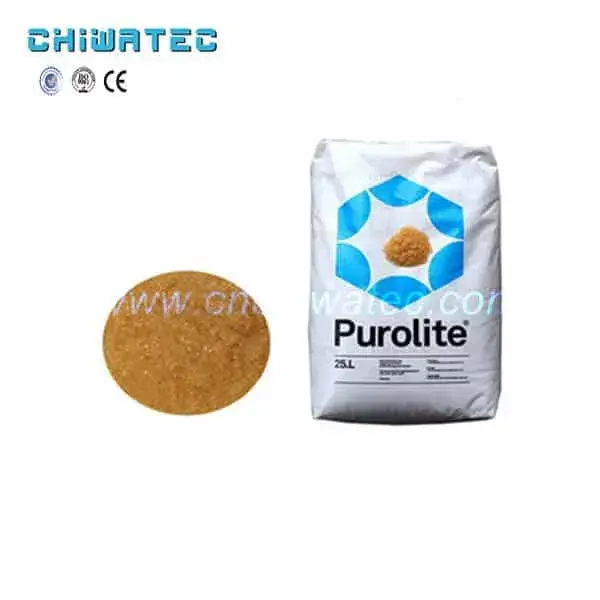
Ion exchange resins are specialized polymer materials that exchange ions between the resin surface and solution, removing unwanted dissolved minerals, metals, and contaminants. This comprehensive guide covers ion exchange capacity, adsorption selectivity, physical properties, and 2026 applications across water treatment, food, pharmaceutical, and industrial sectors.
1. Ion Exchange Capacity of Ion Exchange Resin
Definition and Measurement
The performance of ion exchange resin for ion exchange reaction is reflected in its “ion exchange capacity” – the number of milligram equivalents of ions that can be exchanged per gram of dry resin or per milliliter of wet resin, expressed as meq/g (dry) or meq/mL (wet). When the ion is monovalent, the number of milliequivalents equals the number of milligrams (for divalent or multivalent ions, multiply by the ion valence).
According to 2025 industry data, the global ion exchange resin market reached $2.9 billion USD, with a projected CAGR of 6.4% through 2030, driven by water treatment regulations and industrial purification requirements.
Three Expressions of Exchange Capacity
- Total Exchange Capacity: The total amount of chemical groups that can undergo ion exchange reaction per unit quantity (weight or volume) of the resin. This represents the theoretical maximum capacity under ideal conditions.
- Working Exchange Capacity: The ion exchange capacity of the resin under certain operating conditions. It is related to:
- Resin type and total exchange capacity
- Solution composition (ion concentration, competing ions)
- Flow rate and contact time
- Temperature and pH
- Bed depth and column design
- Regeneration Exchange Capacity: The exchange capacity of the regenerated resin obtained under a certain amount of regenerant, indicating the degree of regeneration of the original chemical groups in the resin.
- Generally 50-90% of total exchange capacity (typically controlled at 70-80%)
- Working exchange capacity is 30-90% of regeneration exchange capacity (for recycled resin)
- The latter ratio is called “resin utilization rate”
Practical Considerations
In actual use, the exchange capacity of ion exchange resins includes adsorption capacity, but the proportion varies depending on resin structure. It cannot be calculated separately and must be corrected based on empirical data and reviewed in actual operation.
Important Note: Ion resin exchange capacity is generally measured with inorganic ions (small size, free diffusion into resin body). In practical applications, solutions often contain high molecular weight organic substances (large size, difficult to enter micropores), so actual exchange capacity will be lower than values measured with inorganic ions. This situation depends on resin type, pore structure size, and material being processed.
2. Adsorption Selectivity of Ion Exchange Resin
Selectivity Principles
Ion exchange resins have different affinities for different ions in solution and are selective in their adsorption. While different resins may show slight variations, general rules govern ion adsorption strength:
(1) Adsorption of Cations
High-valent ions are preferentially adsorbed; low-valent ions are weakly adsorbed. Among ions of the same valence, ions with larger diameters are strongly adsorbed.
Cation Adsorption Order:
Fe³⁺ > Al³⁺ > Pb²⁺ > Ca²⁺ > Mg²⁺ > K⁺ > Na⁺ > H⁺
Practical Implications:
- Hardness removal (Ca²⁺, Mg²⁺) is favored over monovalent ions (Na⁺, K⁺)
- Heavy metal removal (Pb²⁺, Fe³⁺) is highly selective
- H⁺ form resins can displace all cations for complete demineralization
(2) Adsorption of Anions
Strong Base Anion Resin (Inorganic Acid Radicals):
SO₄²⁻ > NO₃⁻ > Cl⁻ > HCO₃⁻ > OH⁻
Weak Base Anion Resin:
OH⁻ > Citrate³⁻ > SO₄²⁻ > Tartrate²⁻ > Oxalate²⁻ > PO₄³⁻ > NO₂⁻ > Cl⁻ > Acetate⁻ > HCO₃⁻
Practical Implications:
- Sulfate removal is prioritized over chloride and bicarbonate
- Nitrate removal competes with sulfate (requires selective resins)
- Weak base resins show strong affinity for organic acids
(3) Adsorption of Colored Matter
Sugar liquid decolorization often uses strong base anion resin, which shows:
- Strong adsorption: Pseudomelanin (reaction product of reducing sugar and amino acid) and alkaline decomposition products of reducing sugar
- Weak adsorption: Carbohydrate pigment (caramel)
This selectivity is attributed to charge differences: the first two are usually negatively charged, while caramel has weak charge.
Selectivity Factors
| Factor | Effect on Selectivity |
|---|---|
| Crosslinking Degree | Higher crosslinking = greater selectivity |
| Pore Structure | Macroporous resins = less selective than gel-type |
| Solution Concentration | Greater selectivity in dilute solutions; reduced in concentrated solutions |
3. Physical Properties of Ion Exchange Resin
(1) Resin Particle Size
Ion exchange resins are manufactured as small spherical beads. Particle size significantly impacts performance:
Size-Performance Relationship:
- Finer particles: Higher reaction speed, but greater flow resistance requiring higher working pressure
- Coarser particles: Lower pressure drop, but slower kinetics
- High viscosity applications: Fine particles significantly reduce flow rate and production capacity (especially in concentrated sugar liquids)
Critical Threshold: Particle size below 0.2mm (approximately 70 mesh) significantly increases fluid resistance, reducing flow rate and production capacity.
Measurement Method: Wet sieving method – resin is sieved after full water absorption and swelling. The mesh diameter through which 90% of particles can pass is called “effective particle size.”
Industry Standard: Most common resin products have effective particle size between 0.4 and 0.6 mm.
Uniformity Coefficient: Expresses particle size distribution uniformity. Calculated as the ratio of 40% cumulative retained sieve hole diameter to effective particle size. Example: IR-120 resin with effective size 0.4-0.6mm has uniformity coefficient of 2.0.
(2) Resin Density
| Density Type | Definition | Typical Values |
|---|---|---|
| True Density | Density of dry resin | Styrene strong acid: 1.26 g/mL Acrylic weak acid: 1.19 g/mL |
| Apparent Density | Weight of wet resin per unit volume (including particle gaps) | Styrene strong acid: 0.85 g/mL Acrylic weak acid: 0.75 g/mL |
Density Factors:
- Higher crosslinking degree = higher density
- Strong acid/strong base resins = higher density than weak acid/weak base
- Macroporous resins = lower density than gel-type
(3) Resin Solubility
Ion exchange resin should be insoluble. However, substances may dissolve during operation:
- Low polymerization degree substances from synthesis process
- Decomposition products generated during use
- Lower crosslinking degree = greater dissolution tendency
- More active groups = greater dissolution tendency
Quality Control: High-quality resins minimize soluble extractables to prevent contamination of treated water.
(4) Swelling (Expansion)
Ion exchange resins contain numerous hydrophilic groups and swell upon water contact. Swelling occurs when ions change:
- Cation resin: H⁺ → Na⁺ causes expansion (increased ion diameter)
- Anion resin: Cl⁻ → OH⁻ causes expansion
- Low crosslinking degree: Larger degree of expansion
Design Consideration: Ion exchange equipment must accommodate resin volume changes caused by ion conversion during operation. Typical swelling: 5-15% volume increase.
(5) Durability (Mechanical Strength)
Resin particles experience transfer, friction, expansion, and contraction during use, resulting in small losses and breakage over time. Resins must have high mechanical strength and wear resistance.
Durability Factors:
- Low crosslinking degree = easier breakage
- Cross-linked structure uniformity and strength = primary durability determinants
- Macroporous resins with high crosslinking = stable structure, withstand repeated regeneration
Typical Service Life: 3-7 years depending on application, regeneration frequency, and maintenance.
4. Application Fields of Ion Exchange Resin
(1) Water Treatment (90% of Global Production)
The water treatment field accounts for approximately 90% of ion exchange resin production, used to remove various anions and cations from water.
Primary Applications:
- Thermal Power Plants: Largest consumption – boiler makeup water purification
- Atomic Energy: Ultrapure water for reactor cooling and processes
- Semiconductor Industry: UPW (Ultrapure Water) for wafer fabrication
- Electronics: High-purity water for component manufacturing
- Municipal Water: Hardness removal, nitrate reduction, heavy metal removal
- Industrial Process Water: Cooling towers, manufacturing processes
(2) Food Industry (Second Largest Consumer)
Ion exchange resins are used in sugar, monosodium glutamate, wine refining, biological products, and other food processing applications.
Key Applications:
- High Fructose Corn Syrup (HFCS): Starch extraction → hydrolysis → glucose/fructose → ion exchange treatment → high fructose syrup
- Sugar Decolorization: Removal of colored compounds from sugar syrups
- Juice Purification: Acid reduction, bitterness removal
- Dairy Processing: Demineralization of whey, lactose purification
- Beverage Treatment: Water adjustment, contaminant removal
(3) Pharmaceutical Industry
Ion exchange resins play crucial roles in antibiotic development and quality improvement:
- Antibiotic Production: Streptomycin purification (prominent example)
- Active Pharmaceutical Ingredients (APIs): Purification and isolation
- Traditional Chinese Medicine: Active compound extraction and concentration
- Water for Injection (WFI): Ultrapure water production
- Drug Delivery: Controlled release formulations
(4) Synthetic Chemistry and Petrochemical Industry
Ion exchange resins replace inorganic acids and bases as catalysts in organic synthesis:
Advantages Over Traditional Catalysts:
- Reusable (multiple cycles)
- Easy product separation
- No reactor corrosion
- No environmental pollution
- Easy reaction control
Key Applications:
- Esterification: Acid-catalyzed reactions
- Hydrolysis: Water-splitting reactions
- Transesterification: Biodiesel production
- Hydration: Alcohol synthesis
- MTBE Production: Methyl tert-butyl ether from isobutylene + methanol (replaces tetraethyl lead, eliminates lead pollution)
(5) Environmental Protection
Ion exchange resins address critical environmental concerns:
- Electroplating Waste: Metal ion removal and recovery (Cu, Ni, Zn, Cr)
- Film Production Waste: Useful substance recovery
- Mining Wastewater: Heavy metal removal
- Nuclear Waste: Radioactive isotope containment
- Perchlorate Removal: tratamiento de agua potable
(6) Hydrometallurgy and Others
- Uranium Processing: Separation, enrichment, and purification from depleted ore
- Rare Earth Elements: Extraction and separation (La, Ce, Nd, etc.)
- Precious Metals: Gold, silver, platinum recovery from ores and waste streams
- Chemical Separation: Isotope separation, analytical chemistry
5. 2026 Technology Trends and Innovations
Advanced Resin Materials
- Monodisperse Resins: Uniform particle size for consistent performance and lower pressure drop
- Nanocomposite Resins: Nanoparticle incorporation for enhanced selectivity and capacity
- High-Capacity Resins: New functional groups with 20-30% higher exchange capacity
- Low-Leaching Resins: Reduced TOC and organic leaching for ultrapure water applications
Smart Monitoring Systems
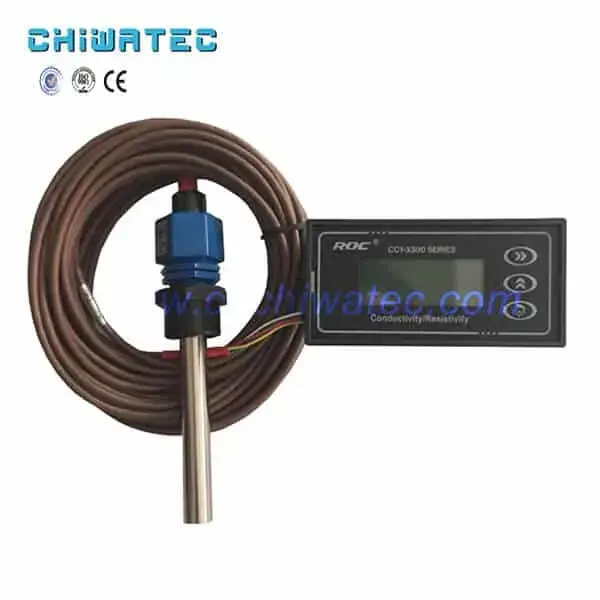
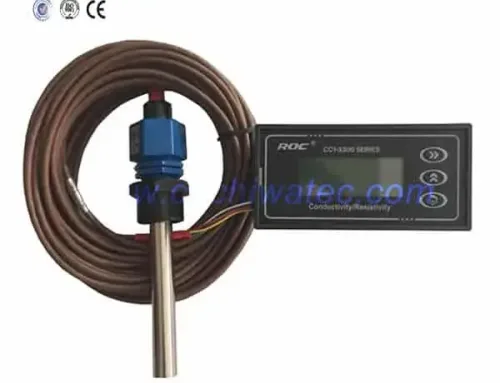
- Online Conductivity: Real-time breakthrough detection
- Resin Health Monitoring: Capacity tracking and predictive replacement
- Automated Regeneration: Demand-based regeneration optimization
- IoT Integration: Remote monitoring and cloud-based analytics
Sustainability Features
- Reduced Regenerant Usage: Counter-current regeneration saves 30-50% chemicals
- Water Efficiency: Optimized rinse cycles reduce wastewater by 40%
- Resin Recycling: Spent resin reactivation and recycling programs
- Energy Recovery: Heat recovery from regeneration processes
Conclusión
Ion exchange resins remain essential components of modern water treatment and industrial purification systems in 2026. Understanding ion exchange capacity, adsorption selectivity, and physical properties enables proper resin selection and optimal system design. With applications spanning water treatment (90% of production), food processing, pharmaceuticals, chemical synthesis, environmental protection, and hydrometallurgy, ion exchange technology continues to evolve with advanced materials, smart monitoring, and sustainability initiatives. As global demand for pure water and high-purity process streams increases, ion exchange resins maintain their position as the most versatile and cost-effective solution for ionic contaminant removal and separation.
Xi’an CHIWATEC Water Treatment Technology is a high-tech enterprise specialized in various water processing devices. We provide comprehensive engineering solutions including designing, machining, installing, commissioning, and customization services. As one of the fastest-developing water treatment equipment manufacturers in Western China, we are committed to delivering innovative and sustainable water treatment solutions.
Further Reading
- Mechanical Filters: Complete Guide & Selection
- Ultrafiltration Membrane Applications in Water Treatment
¿Tiene un proyecto de tratamiento de agua con el que podamos ayudar?
* Diseño, mecanizado, instalación, puesta en marcha, personalización y servicio integral
 Spanish
  English
  Portuguese