

300L/H Reverse Osmosis Pure Water Machine: Complete Commercial RO System Guide 2026
Looking for a reliable 300L/H reverse osmosis pure water machine for your commercial or industrial water treatment application? This comprehensive guide covers the LTLD-RO1000I system specifications, five-stage treatment process, RO membrane technology, installation requirements, maintenance procedures, and cost-benefit analysis to help you select and operate the right 300L/H reverse osmosis pure water machine for your facility.
*Last Updated: May 2026 | Verified Technical Data
Why This Guide Matters
The global commercial water treatment market was valued at approximately USD 35.6 billion in 2024 and is projected to reach USD 56.8 billion by 2034, growing at a CAGR of 4.8%. Small to medium-scale RO systems, particularly the 200-500 L/H capacity segment, represent a rapidly growing market as restaurants, hotels, laboratories, beverage production lines, and small manufacturing facilities increasingly invest in on-site water purification. Understanding the specifications, operational parameters, and maintenance requirements of a 300L/H reverse osmosis pure water machine is essential for maximizing equipment lifespan and ensuring consistent water quality.
Key Industry Trends (2026 Update)
- Compact commercial RO surge – The 200-500 L/H capacity segment has seen 15% year-over-year growth as small and medium businesses prioritize on-site water purification for quality control and cost reduction.
- Energy-efficient pump technology – Modern multi-stage centrifugal pumps, similar to the CDL2-180 series used in the LTLD-RO1000I, achieve 20-30% higher efficiency compared to older diaphragm pump designs, reducing operating costs significantly.
- Extended membrane lifespan – Advances in thin-film composite (TFC) RO membrane chemistry now extend membrane service life to 3-5 years under proper pretreatment conditions, up from 2-3 years in previous generations.
- Smart monitoring integration – New-generation RO systems increasingly feature digital TDS, flow rate, and pressure monitoring, reducing unplanned downtime by up to 40% through early detection of performance deviations.
1. What Are the Key Specifications of the 300L/H Reverse Osmosis Pure Water Machine?
System Performance Parameters
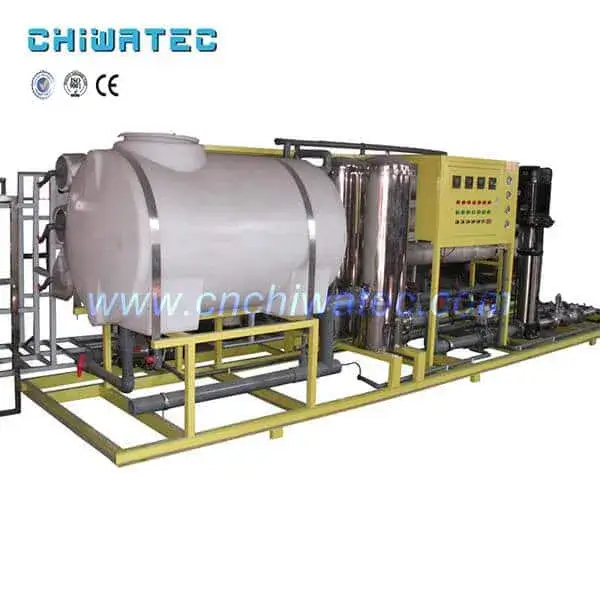
The LTLD-RO1000I is a compact yet powerful commercial reverse osmosis pure water machine with a rated production capacity of 300 L/H at 25 degrees C feed water temperature. Core specifications include a 2.75 kW power draw, AC220V 18A or AC380V 9A 50Hz power supply options, and a dual-stage 4040 membrane configuration (two 4-inch by 40-inch membrane elements in series arrangement). The system integrates a CDL2-180/2.2KW multi-stage centrifugal high-pressure pump, a CHL2-30/0.55KW booster pump, and comprehensive pretreatment components including a 200 mm by 1000 mm preprocessor (2 units) and 90 mm by 1000 mm precision filter cartridges (2 sets).
Physical Configuration
The complete system measures 1700 mm by 710 mm by 1700 mm, with an operational weight of approximately 500 kg including media and water. This compact footprint makes it suitable for installation in standard utility rooms and equipment bays. The pretreatment vessels contain 60 kg of quartz sand media and 30 kg of activated carbon, providing adequate contact time for effective filtration and adsorption between backwashing cycles.
2. How Does the Five-Stage Treatment Process Work?
Stage 1: Mechanical Filtration (Quartz Sand)
The 300L/H reverse osmosis pure water machine begins treatment with one-stage mechanical filtration through a quartz sand media bed. This removes suspended solids, sediment, turbidity, and particulate matter larger than 20-50 microns, protecting downstream equipment from abrasion and fouling. The 60 kg quartz sand charge at a 200 mm bed depth supports filtration rates of 8-12 m/h under standard operating conditions, achieving effluent turbidity below 1 NTU.
Stage 2: Adsorption Filtration (Activated Carbon)
Two-stage adsorption filtration using 30 kg of granular activated carbon removes free chlorine, chloramines, organic compounds, taste, odor, and color from the feed water. Chlorine removal is particularly critical, as free chlorine at concentrations as low as 0.1 ppm can permanently oxidize and damage thin-film composite RO membrane elements, causing irreversible rejection rate loss.
Stage 3: Resin Softening (Ion Exchange)
Three-stage resin softening exchange removes hardness ions (calcium Ca2+ and magnesium Mg2+) through sodium-form cation exchange resin. Hardness must be reduced to below 1 mg/L as CaCO3 before the feed water enters the RO membrane elements to prevent calcium carbonate and calcium sulfate scaling on membrane surfaces, which can cause permanent flux decline.
Stage 4: Precision Security Filtration
Four-stage precision security filtration using 5-micron melt-blown polypropylene cartridge filters provides final particulate protection before the high-pressure RO stage. This stage captures any media fines, resin beads, or particulate matter that may have escaped the upstream pretreatment stages, preventing damage to the high-pressure pump impellers and RO membrane feed spacers.
Stage 5: Reverse Osmosis Membrane Separation
The final RO stage employs two 4040 TFC membrane elements operating at 150-200 psi (10-14 bar) feed pressure to achieve 98-99% salt rejection. The permeate water meets the National Standard for Bottled Drinking Water quality specifications, with conductivity typically reduced from 300-500 microsiemens/cm feed to below 15-30 microsiemens/cm permeate, representing greater than 95% TDS reduction.
3. What Is Reverse Osmosis and How Does the RO Membrane Work?
Fundamental Principle
Reverse osmosis is a pressure-driven membrane separation process in which water molecules in a concentrated solution pass through a semi-permeable membrane to a dilute solution under applied pressure greater than the natural osmotic pressure. Unlike natural osmosis (where solvent moves from low to high concentration), reverse osmosis requires external energy input from the multi-stage high-pressure pump. The applied pressure must overcome both the feed water’s osmotic pressure (typically 5-10 psi for brackish water sources) and the hydraulic resistance of the membrane element and feed channel.
RO Membrane Structure and Performance
The reverse osmosis membrane used in the LTLD-RO1000I is a thin-film composite (TFC) semi-permeable membrane with surface separation pores measuring 0.0001 microns (0.1 nanometers or 1 Angstrom). This molecular-level pore diameter allows only water molecules to pass through while rejecting dissolved inorganic salts, heavy metals, bacteria, viruses, pyrogens, organic compounds, and colloidal matter. The 4040 format spiral-wound element (4-inch diameter, 40-inch length) provides approximately 80-100 square feet of active membrane area, with each element delivering 2200-2600 GPD (gallons per day) at standard test conditions of 225 psi, 77 degrees F, and 2000 ppm NaCl feed. For a deeper understanding of RO membrane principles, refer to our detailed introduction to reverse osmosis pure water equipment.
4. What Contaminants Can the 300L/H RO System Remove?
Comprehensive Contaminant Rejection Capabilities
The dual-stage 4040 RO membrane configuration achieves industry-standard rejection rates across a broad contaminant spectrum: dissolved inorganic solids at 98-99% rejection, heavy metals including lead, arsenic, cadmium, chromium, and mercury at 95-99%, bacteria and viruses at 99.9% plus, organic compounds with molecular weight above 100 Da at 90-98%, and ionic species including sodium (Na+), chloride (Cl-), sulfate (SO42-), nitrate (NO3-), and fluoride (F-) at 92-98%.
Target Industry Applications
The 300L/H reverse osmosis pure water machine is widely deployed across multiple sectors: electronic and semiconductor ultrapure water pretreatment, pharmaceutical and medical sterile water systems (USP Purified Water compliance), chemical processing dilution water, textile manufacturing process water, electric power boiler feed water (low-pressure boiler make-up), seawater desalination for small marine vessels, bottled drinking water and beverage production, food processing ingredient water, and aqueous solution desalination, purification, and concentration processes.
5. What Are the Feed Water Quality Requirements?
Critical Inlet Water Parameters
For optimal RO membrane performance and maximum service life, the feed water to this 300L/H reverse osmosis pure water machine must meet the following criteria: turbidity below 1 NTU, Silt Density Index (SDI) below 5, free chlorine below 0.1 ppm, total iron below 0.1 ppm, manganese below 0.05 ppm, pH between 2 and 11, temperature between 4 degrees C and 30 degrees C, and total hardness below 1 mg/L as CaCO3. Feed water exceeding any of these parameters requires additional pretreatment steps before entering the RO system.
Impact of Non-Compliant Feed Water
Operating the system with feed water outside recommended parameters leads to accelerated membrane fouling (biofouling, scaling, colloidal fouling, or organic fouling), increased differential pressure across membrane elements, reduced permeate flow (flux decline), higher specific energy consumption (kWh per cubic meter), and premature membrane element replacement. Xi’an CHIWATEC engineers provide complimentary feed water analysis and custom pretreatment recommendations to ensure optimal system performance and membrane longevity.
6. How to Install and Commission the LTLD-RO1000I?
Site Preparation and Installation Requirements
The system requires a level concrete or reinforced flooring surface capable of supporting 500 kg operational weight, an adequate floor drain for reject water discharge (approximately 300-450 L/H at 50-60% recovery), a 220V or 380V electrical supply with proper grounding and overcurrent protection, and an ambient temperature between 5 degrees C and 40 degrees C. A minimum clearance of 600 mm on all sides is necessary for membrane element replacement and routine maintenance access. For detailed installation procedures, see our guide on how to install and debug reverse osmosis equipment.
Step-by-Step Commissioning Procedure
Initial system commissioning follows a structured sequence: (1) flush quartz sand and activated carbon media until effluent runs clear and chlorine breakthrough test passes, (2) regenerate the cation resin softener with saturated brine solution, (3) install new 5-micron cartridge filter elements, (4) load and seal 4040 RO membrane elements with proper brine seal orientation, (5) set the high-pressure switch cutoff at 250 psi, (6) adjust concentrate flow control valve to achieve 50-60% recovery, and (7) gradually increase feed pressure to the operating range while monitoring permeate conductivity with a calibrated handheld TDS meter. First-hour permeate should be diverted to drain until conductivity stabilizes below 20 microsiemens/cm.
7. What Maintenance Does a 300L/H RO Machine Require?
Daily and Weekly Maintenance Schedule
Daily operator checks include verifying feed pressure (150-200 psi), confirming permeate flow rate (300 L/H plus or minus 10% at 25 degrees C), inspecting for leaks at all connection points, and recording feed and permeate TDS readings in the operation log. Weekly tasks include inspecting pretreatment media condition, checking brine seal integrity, verifying the automatic permeate flush function operates correctly, and cleaning the conductivity probe with a mild acid solution.
Monthly and Quarterly Maintenance
Monthly tasks include replacing 5-micron cartridge filter elements, checking the resin softener brine tank salt level (maintain at 50% full minimum), and verifying TDS meter calibration against a standard calibration solution. Quarterly maintenance includes backwashing sand and carbon media until clear, performing a full resin softener regeneration cycle, inspecting and cleaning the high-pressure pump inlet strainer, testing low-pressure and high-pressure switch functionality, and conducting a full system performance normalization calculation. Refer to our comprehensive operating rules for pure water production equipment for detailed standard procedures.
Annual Membrane Cleaning and Replacement Guidelines
RO membrane elements require chemical cleaning when normalized permeate flow declines by 15% or differential pressure increases by 20% from recorded baseline values. The standard cleaning protocol uses sequential acidic cleaning (citric acid at pH 2-3 to remove metal hydroxides and calcium carbonate scale) followed by alkaline cleaning (sodium hydroxide at pH 11-12 with 0.1% EDTA to remove organic foulants and biofilms). Each cleaning cycle should recirculate for 30-60 minutes at low pressure, followed by a 60-minute soak and fresh water rinse. Properly maintained membrane elements typically require replacement every 3-5 years. See our detailed guide on cleaning methods for reverse osmosis equipment maintenance for complete procedures.
8. What Are Common Troubleshooting Issues?
Low Permeate Production Flow
If permeate output drops below 250 L/H, systematically check: feed water temperature (production decreases approximately 3% per degree C below 25 degrees C), verify feed pressure is at the 150-200 psi setpoint, inspect 5-micron cartridge filters for clogging (replace if differential pressure exceeds 10 psi), check for membrane fouling or scaling, and verify the concentrate flow control valve is not inadvertently closed. Component cleaning or replacement typically restores rated flow.
Elevated Permeate Conductivity
Product water TDS above 50 microsiemens/cm from a 300-500 microsiemens/cm feed indicates compromised membrane rejection. Common causes in order of diagnostic priority: O-ring seal failure at membrane element interconnections (most frequent), brine seal damage or misalignment, membrane oxidation from chlorine or chloramine exposure, or end-of-life membrane elements requiring replacement. For a comprehensive list of issues and solutions, consult our common fault solutions guide for pure water machines.
Abnormal Pump Noise or Vibration
Unusual noise from the high-pressure multi-stage pump may indicate cavitation caused by insufficient feed water supply (check inlet pressure, pre-filter condition, and feed valve position), worn pump bearings or impeller wear, or air entrainment in the feed water line. Address root causes promptly as cavitation can rapidly damage pump internals.
9. What Is the Cost-Benefit Analysis of a 300L/H RO System?
Capital and Operating Cost Breakdown
The total cost of ownership for a 300L/H reverse osmosis pure water machine includes the initial equipment investment, site installation costs (civil, electrical, and plumbing), consumable replacement (cartridge filters at USD 15-30 per set monthly, antiscalant at USD 50-80 per month, cleaning chemicals at USD 200-400 per cleaning event), energy consumption (2.75 kW multiplied by operating hours), and periodic membrane replacement at USD 500-800 per set every 3-5 years. At 8 hours per day operation, annual electricity costs at USD 0.12/kWh total approximately USD 960.
Return on Investment Projections
Compared to purchasing bottled water or trucked-in purified water at USD 0.50-1.00 per liter, on-site RO systems typically achieve per-liter costs of USD 0.01-0.03, representing a 95-98% cost reduction. For a facility consuming 300 L/H for 8 hours per day (2400 L/day, approximately 720,000 L/year), annual savings range from USD 350,000 to 700,000 compared to bottled water alternatives. Payback periods typically range from 12-24 months depending on local water costs and electricity rates.
10. Why Choose Xi’an CHIWATEC for Your 300L/H RO System?
Engineering Experience and Track Record
Xi’an CHIWATEC Water Treatment Technology Co., Ltd. has extensive experience in designing, manufacturing, and commissioning commercial and industrial RO systems spanning capacities from 100 L/H to 100,000 L/H for diverse applications worldwide. Their engineering team evaluates site-specific feed water quality, space constraints, production requirements, and regulatory compliance needs to deliver tailored solutions.
Turnkey Services and Support
CHIWATEC provides a complete one-stop service model covering system process design and engineering, equipment fabrication, on-site installation and commissioning, operator training, and ongoing remote technical support. After-sales service includes troubleshooting assistance, consumables supply coordination, and performance optimization recommendations to ensure long-term system reliability and efficiency.
Customization and Upgrade Options
Beyond the standard LTLD-RO1000I configuration, CHIWATEC offers customization including PLC-based automation with color touchscreen HMI, remote monitoring via SCADA or cloud-based IoT platforms, 304 or 316L stainless steel sanitary piping for food and pharmaceutical applications, variable frequency drive (VFD) control for energy-optimized pump operation, and energy recovery devices for high-efficiency operation on elevated TDS feed water.
Conclusión
The LTLD-RO1000I 300L/H reverse osmosis pure water machine delivers reliable, high-quality purified water for a wide range of commercial and industrial applications. With its comprehensive five-stage pretreatment system, dual-4040 TFC membrane configuration, robust stainless steel frame construction, and efficient multi-stage pump design, it offers excellent value for operations requiring consistent 300 L/H product water capacity. Proper installation, diligent preventive maintenance, and regular feed water quality monitoring are essential for maximizing membrane service life and minimizing total operating costs. For expert guidance on selecting, configuring, or optimizing a 300L/H reverse osmosis pure water machine for your specific application requirements, contact Xi’an CHIWATEC today at [email protected] o [email protected], or reach us via WhatsApp.
Frequently Asked Questions
Q1: How much electricity does a 300L/H RO system consume per day?
A 300L/H reverse osmosis pure water machine with a 2.75 kW total power draw consumes approximately 22 kWh per 8-hour operating day. At an average commercial electricity rate of USD 0.12/kWh, daily energy costs are approximately USD 2.64, yielding a per-liter energy cost of approximately USD 0.0011/L. This makes RO one of the most energy-efficient water purification technologies available for this capacity range.
Q2: What is the water recovery rate of the LTLD-RO1000I?
The standard system recovery rate for a single-pass brackish water RO system in this capacity range is 50-60%. This means that for every 100 liters of feed water input, 50-60 liters of purified permeate are produced and 40-50 liters of concentrated reject water are discharged. The reject water can be collected and reused for non-potable applications such as cooling tower make-up, landscape irrigation, or floor cleaning to improve overall facility water efficiency to above 90%.
Q3: How long do 4040 RO membranes last in a 300L/H system?
Under proper operating conditions with adequate pretreatment and regular maintenance, the 4040 TFC RO membrane elements in a 300L/H system typically last 3-5 years. Key factors that extend membrane life include maintaining feed water within recommended quality parameters, performing automatic permeate flush after each operating cycle, conducting timely chemical cleaning when normalized performance declines by 15%, and strictly avoiding chlorine or oxidizer exposure.
Q4: Can the LTLD-RO1000I be upgraded for higher production capacity?
Yes, the system frame and piping design support capacity expansion through adding additional 4040 membrane elements in parallel configuration, upgrading to a higher-flow high-pressure pump, and expanding pretreatment vessel capacity. CHIWATEC engineers can evaluate increased production requirements and recommend the most cost-effective upgrade path, which may include converting to a larger membrane housing configuration or adding a second RO stage.
Q5: What documentation and support come with the system?
Xi’an CHIWATEC provides a complete documentation package including a detailed process and instrumentation diagram (P and ID), equipment layout drawing, electrical schematic, operation and maintenance manual with step-by-step procedures, and a preventative maintenance schedule. All systems include a standard 12-month warranty covering manufacturing defects, with extended warranty and preventative maintenance service contracts available as options. The CHIWATEC engineering support team is available for remote troubleshooting and guidance throughout the system’s service life.
Related Resources and Further Reading
¿Tiene un proyecto de tratamiento de agua con el que podamos ayudar?
* Diseño, mecanizado, instalación, puesta en marcha, personalización y servicio integral






 Spanish
  English
  Portuguese




