Best Practices for Antiscalant Treatment and Dosing in Reverse Osmosis Systems
Requirements for Antiscalant Treatment and Dosing in Reverse Osmosis Systems
- Dosing Point
To achieve maximum efficiency, MDC151 antiscalant should be added before the mixer or security filter. For precise dosing points and amounts tailored to your specific system conditions, it’s recommended to consult with your local Argo Scientific representative. In some systems, specific dosing points and injection equipment are essential for optimal performance. - Dosing Amount
The required dosing amount must be determined based on individual system operating conditions. Factors such as feed water salinity, temperature, recovery rate, and the type of reverse osmosis (RO) membrane being used are crucial in calculating the appropriate dosage. - Dilution
DC151 antiscalant can be used directly or diluted. If dilution is necessary, use RO permeate or desalinated water, with a dilution ratio not exceeding 10 times at room temperature. - Packaging
The product is available in 25 KG y 220 KG plastic drums.
Importance of Proper Antiscalant Treatment in Reverse Osmosis Systems
As reverse osmosis technology becomes increasingly integrated into industrial production, various challenges such as pollution and scaling have emerged, primarily due to water source limitations, design flaws, and the inappropriate selection of water treatment chemicals. Among these challenges, scaling caused by incompatible antiscalants has become a significant issue, leading to reduced efficiency and premature equipment failure.
Reverse osmosis (RO) technology is one of the most mature physical desalination processes currently used in water treatment. However, differences in water sources and user requirements have led to the development of various RO systems with distinct process flows. When system design is flawed, or incompatible chemical additives are used, it often results in reduced water production and quality, and in severe cases, can cause premature failure of critical RO components, such as the membrane elements.
In the RO process, water is pressured through a semi-permeable membrane, separating water molecules from dissolved salts and other substances. As the concentration of these salts and substances increases in the feed/concentrate stream, some may begin to precipitate and form scale. To prevent this, antiscalants are added to the feed water, inhibiting scale formation.
Selecting the Right Antiscalant
Choosing an antiscalant that is compatible with your water source and effectively prevents scaling is a complex task. The author has conducted tests using a rapid conductivity evaluation method on several brands of antiscalants to identify the most economical and suitable options, as well as the optimal dosing amounts.
RO Antiscalant Test Methodology
- Principio: The conductivity of a solution can indirectly indicate the amount of dissolved salts. When salts begin to precipitate, the number of conductive ions in the solution decreases, leading to a sharp drop in conductivity. By identifying this drop, the supersaturation point of calcium carbonate can be determined. The greater the supersaturation, the more effective the antiscalant.
- Equipment and Reagents:
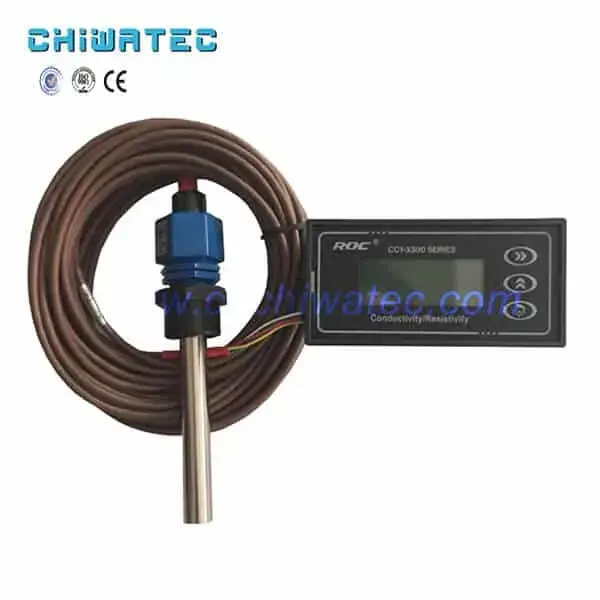
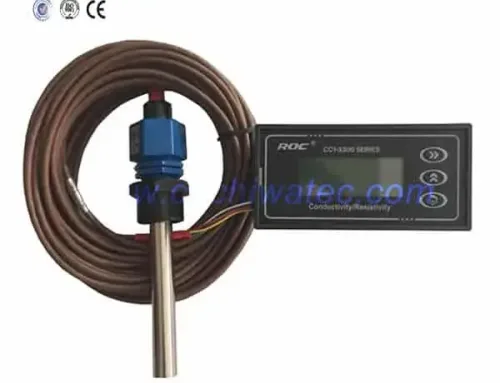
- Digital conductivity meter
- Magnetic stirrer with heating
- Thermometer, beakers, burette, and thermostatic water bath
- 1 mol/L calcium chloride solution
- 0.1 mol/L sodium carbonate solution
- 0.1 mol/L sulfuric acid
- Antiscalants A, B, C, D, E
- Procedure:
- Add 198.4 mL of distilled water and 1.0 mL of 1 mol/L calcium chloride solution to a beaker (resulting in a water hardness of 5 mmol/L). Add 0.6 mL of antiscalant to achieve a concentration of 3 mg/L. Seal the beaker and place it in a thermostatic water bath. Once the temperature stabilizes at 25°C, titrate with 0.1 mol/L sodium carbonate solution, adding specific volumes each time (0.1 mL or 0.5 mL, adding 0.1 mL near the conductivity inflection point). After each addition, allow the reading to stabilize for 1 minute before recording the conductivity. Use a magnetic stirrer to maintain consistent stirring during the titration.
- Plot the volume of sodium carbonate solution added against conductivity. Before each measurement, rinse the conductivity sensor with 0.1 mol/L sulfuric acid and distilled water to remove any residual nuclei or precipitates, which could otherwise cause premature conductivity drops and unreliable data.
- Blank Test:
- For the blank test, do not add antiscalant. Use 199 mL of distilled water.
By analyzing the test results, the most effective antiscalant and dosing amount can be selected for your system.
Conclusión
Selecting the right antiscalant and determining the optimal dosing strategy are critical steps in ensuring the longevity and performance of reverse osmosis systems. Through proper testing and evaluation, you can avoid scaling issues, protect your RO membranes, and maintain high-quality water output.
Xian CHIWATEC Water Treatment Technology es una empresa de alta tecnología especializada en varios dispositivos de procesamiento de agua. Aparte de estos productos individuales, que cubren una serie de tipos y series, también podemos ayudar con proyectos de ingeniería integrales relacionados. Gracias a nuestro arduo trabajo y dedicación desde nuestra fundación, ahora somos uno de los fabricantes de equipos de tratamiento de agua de más rápido desarrollo en el oeste de China.
Otras lecturas
SÍGANOS
¿Tiene un proyecto de tratamiento de agua con el que podamos ayudar?
* Diseño, mecanizado, instalación, puesta en marcha, personalización y servicio integral
 Spanish
  English
  Portuguese