

Membrane Desalination Technology 2026: Applications, Progress & Industry Trends
Tecnología de desalinización por membrana continues to lead global water treatment solutions in 2026. This comprehensive guide explores current applications, technological advances, and industry trends shaping the future of seawater desalination and water purification systems worldwide.
Key Takeaways:
- Global membrane desalination market reaches $28.5 billion in 2025, projected to exceed $45 billion by 2030
- Reverse osmosis (RO) accounts for 85% of new desalination installations globally
- Energy consumption reduced to 2.5-3.5 kWh/m³ for seawater RO, approaching theoretical limits
- Emerging technologies (FO, MD, graphene membranes) show promising commercial viability
Introduction: State of Membrane Desalination in 2026
The global water crisis intensifies as freshwater scarcity affects over 2 billion people worldwide. Tecnología de desalinización por membrana has emerged as the most viable solution for converting seawater and brackish water into potable water. According to 2025-2026 industry reports, the global desalination market continues rapid expansion, with membrane-based systems dominating new installations.
Current statistics indicate over 20,000 desalination plants operating globally, producing more than 100 million m³ of freshwater daily. Membrane technologies, particularly reverse osmosis, account for approximately 85% of total desalination capacity, reflecting their superior energy efficiency and cost-effectiveness compared to thermal processes.
Current Applications of Membrane Desalination Technology
Municipal Water Supply
Large-scale municipal desalination plants represent the primary application of membrane technology. Countries in the Middle East, North Africa, and water-stressed regions increasingly rely on seawater reverse osmosis (SWRO) systems for urban water security.
Notable 2026 Installations:
- Saudi Arabia: Ras Al-Khair plant (1,036,000 m³/day) – world largest hybrid MSF-RO facility
- UAE: Taweelah RO plant (909,200 m³/day) – largest single-train SWRO globally
- Israel: Sorek II expansion (624,000 m³/day) – advanced energy recovery systems
- Singapore: NEWater facilities – integrated membrane systems for water recycling
Aplicaciones industriales
Industrial sectors utilize membrane desalination for process water, cooling systems, and wastewater treatment. Key industries include:
Power Generation: Thermal power plants require high-purity water for boilers and cooling towers. Brackish water RO systems provide cost-effective solutions for inland facilities.
Petrochemical: Refineries and chemical plants use desalinated water for processing, particularly in coastal locations where seawater is readily available.
Mining: Mining operations employ membrane technology for treating saline groundwater and recovering valuable minerals from brine concentrates.
Food & Beverage: Production facilities require consistent water quality for manufacturing processes, ingredient preparation, and cleaning operations.
Small-Scale and Remote Applications
Containerized and modular desalination systems serve remote communities, islands, military installations, and emergency response scenarios. These systems typically range from 10-5,000 m³/day capacity, offering rapid deployment and minimal infrastructure requirements.
2026 Market Trends:
- Solar-powered RO systems gaining traction in off-grid locations
- Smart monitoring and IoT integration enabling remote operation
- Hybrid systems combining RO with renewable energy sources
- Containerized plants reducing installation time and costs
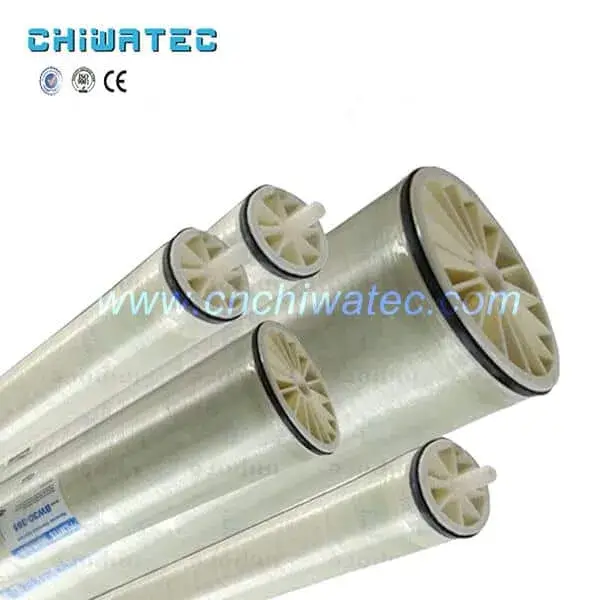
Technological Progress and Innovations
Membrane Material Advances
Recent developments in membrane materials significantly improve performance, durability, and fouling resistance:
Thin-Film Composite (TFC) Membranes: Third-generation TFC membranes achieve higher permeability while maintaining salt rejection rates exceeding 99.8%. Surface modifications enhance chlorine resistance and reduce biofouling.
Graphene Oxide Membranes: Emerging graphene-based membranes demonstrate exceptional water flux and selectivity. Commercial applications expected within 3-5 years as manufacturing costs decrease.
Biomimetic Membranes: Aquaporin-inspired membranes replicate natural water channel proteins, achieving superior permeability-selectivity balance. Pilot-scale testing shows promising results for energy reduction.
Energy Recovery and Efficiency
Energy consumption remains the primary operational cost for membrane desalination. 2026 technology achieves remarkable efficiency improvements:
Isobaric Energy Recovery Devices (ERD): Modern ERDs recover 95-98% of pressure energy from concentrate streams, reducing specific energy consumption to 2.5-3.5 kWh/m³ for seawater RO.
High-Efficiency Pumps: Variable frequency drives (VFD) and optimized pump designs minimize energy losses throughout the system.
Process Optimization: Advanced control algorithms adjust operating parameters in real-time, maximizing efficiency under varying feedwater conditions.
Emerging Desalination Technologies
Several innovative technologies show commercial potential:
Forward Osmosis (FO): FO systems utilize osmotic pressure gradients instead of hydraulic pressure, potentially reducing energy requirements. Hybrid FO-RO systems combine advantages of both technologies.
Membrane Distillation (MD): MD leverages temperature gradients across hydrophobic membranes, enabling integration with waste heat or solar thermal energy.
Capacitive Deionization (CDI): CDI removes ions through electrostatic adsorption on charged electrodes, offering energy advantages for brackish water treatment.
Industry Trends and Market Dynamics
Market Growth Projections
The global membrane desalination market demonstrates robust growth trajectory:
- 2025 Market Value: $28.5 billion USD
- 2030 Projection: $45-48 billion USD
- CAGR (2025-2030): 9.2-10.5%
- Installed Capacity Growth: 7-8% annually through 2030
Regional leaders include Middle East & North Africa (45% of global capacity), Asia-Pacific (fastest growth at 12% CAGR), and North America (technology innovation hub).
Sustainability and Environmental Considerations
Environmental concerns drive industry evolution toward more sustainable practices:
Brine Management: Concentrate disposal poses environmental challenges. Innovative solutions include zero liquid discharge (ZLD), mineral recovery, and beneficial reuse applications.
Carbon Footprint Reduction: Integration with renewable energy (solar PV, wind) reduces greenhouse gas emissions. Several carbon-neutral desalination projects announced for 2026-2028.
Marine Ecosystem Protection: Improved intake and outfall designs minimize impacts on marine life. Environmental monitoring becomes standard practice for new installations.
Cost Trends
Desalination costs continue declining due to technological improvements and economies of scale:
- Seawater RO: $0.50-0.85/m³ (large-scale plants)
- Brackish Water RO: $0.20-0.50/m³
- Small-Scale Systems: $1.50-3.00/m³
Cost reductions stem from improved membrane performance, energy recovery efficiency, and optimized plant design. Membrane replacement costs decreased 30% over the past decade.
Conclusion: Future Outlook for Membrane Desalination
Tecnología de desalinización por membrana stands at the forefront of global water security solutions. Key success factors for continued growth include:
- Sustained R&D investment in next-generation membrane materials
- Integration with renewable energy for sustainable operations
- Addressing environmental concerns through innovative brine management
- Expanding access to water-scarce regions through cost-effective solutions
- Smart technology adoption for optimized performance and reduced operational costs
As water scarcity intensifies globally, membrane desalination will play increasingly critical roles in municipal, industrial, and agricultural water supply. The technology evolution toward higher efficiency, lower costs, and improved sustainability positions membrane systems as essential infrastructure for the 21st century.
FAQ: Membrane Desalination Technology
1. What is the most common membrane desalination technology?
Reverse osmosis (RO) dominates the membrane desalination market, accounting for approximately 85% of global installed capacity. RO offers superior energy efficiency, proven reliability, and competitive costs compared to alternative technologies.
2. How much energy does seawater RO desalination require?
Modern seawater RO plants with energy recovery devices consume 2.5-3.5 kWh/m³. This approaches the theoretical minimum energy requirement and represents a 70% reduction compared to first-generation RO systems from the 1980s.
3. What is the typical lifespan of RO membranes?
RO membranes typically last 5-7 years with proper maintenance and pretreatment. Factors affecting lifespan include feedwater quality, operating conditions, cleaning frequency, and membrane material. Regular monitoring and preventive maintenance extend service life.
4. How do you handle brine concentrate from desalination?
Brine management strategies include ocean discharge (with proper diffusers), deep well injection, evaporation ponds, zero liquid discharge (ZLD) systems, and mineral recovery. Selection depends on location, environmental regulations, and economic considerations.
5. Can membrane desalination be powered by renewable energy?
Yes, renewable energy integration is increasingly common. Solar PV, wind power, and hybrid systems power desalination plants worldwide. Several large-scale renewable-powered facilities operate successfully in Saudi Arabia, Australia, and the Middle East, demonstrating technical and economic viability.
Further Reading
¿Tiene un proyecto de tratamiento de agua con el que podamos ayudar?
* Diseño, mecanizado, instalación, puesta en marcha, personalización y servicio integral






 Spanish
  English
  Portuguese




