Application and Preparation of Pure Water and Ultrapure Water
Learn about the applications, standards, and preparation technologies of pure water and ultrapure water used in laboratories, healthcare, and high-tech industries. This guide covers essential purification methods such as reverse osmosis (RO), intercambio iónico, ultrafiltración, and UV oxidation, ensuring water purity that meets global standards like GB, ASTM, and USP.
1. Overview of Pure Water and Ultrapure Water
With the rapid advancement of modern science and technology, research and industrial production have moved toward microscopic precision and ultra-high purity requirements. In laboratories, biopharmaceutical production, and semiconductor manufacturing, the quality of water directly affects the accuracy of experiments and the stability of products.
Today, certain experiments demand impurity concentrations as low as parts per billion (ppb) or even parts per trillion (ppt). For example:
- Life sciences require water free of heavy metals y organic contaminants.
- Analytical chemistry applications such as HPLC (High-Performance Liquid Chromatography) demand agua ultra pura to avoid interference in results.
To meet such stringent requirements, several international organizations have established water quality standards, including:
- China GB6682-92 – Water for analytical laboratories
- China GB/T11446.1-1997 – Water for the electronics industry
- ACS (American Chemical Society)
- ASTM (American Society for Testing and Materials)
- USP (United States Pharmacopeia)
- NCCLS (International Committee for Clinical Laboratory Standards)
2. Applications of Pure Water and Ultrapure Water
(1) Pure Water (Reverse Osmosis Water)
Pure water, often produced by reverse osmosis (RO), is commonly used for:
- Final cleaning of laboratory glassware and utensils
- Preparation of buffer solutions and chemical reagents
- Preparation of microbial culture media
- Supplying hydrogen generators, autoclaves, and humidifiers
- Drinking water for laboratory animals and staff
(2) Ultrapure Water
Ultrapure water undergoes additional purification to remove ionic, organic, and microbial impurities. It is used for:
- Cell and tissue culture of animals and plants
- Clinical analyzers, biochemical analyzers, and dialysis systems
- Preparation and dilution of analytical reagents and pharmaceuticals
- Physiological, pathological, and toxicological testing
- Water for HPLC, ion chromatography, and atomic absorption spectroscopy
- Water for IVF (in vitro fertilization) and medical laboratories
3. Preparation Process of Pure Water and Ultrapure Water
The most efficient and stable method for producing pure and ultrapure water today is through an integrated pure water/ultrapure water purification system. These systems focus on two main principles:
- Achieving the best water quality
- Maintaining stable and consistent purity levels
Step 1: Pre-Treatment
Natural water typically contains impurities such as inorganic salts, organics, suspended particles, microorganisms, and dissolved gases.
Pre-treatment units are designed to remove these contaminants before they reach the reverse osmosis membrane. Common stages include:
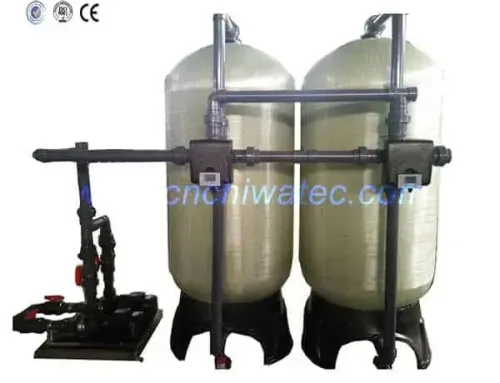
- Sand and activated carbon filters to remove large particles and chlorine
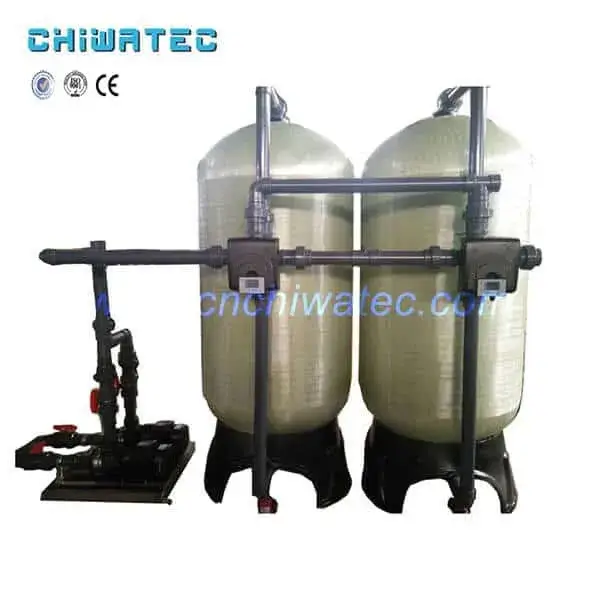
- Water softeners to remove calcium and magnesium ions
- Cartridge filtration for fine particles
This step is crucial to protect the Membrana de ósmosis inversa, as poor pre-treatment shortens membrane life and reduces purification efficiency.
Step 2: Reverse Osmosis (RO)
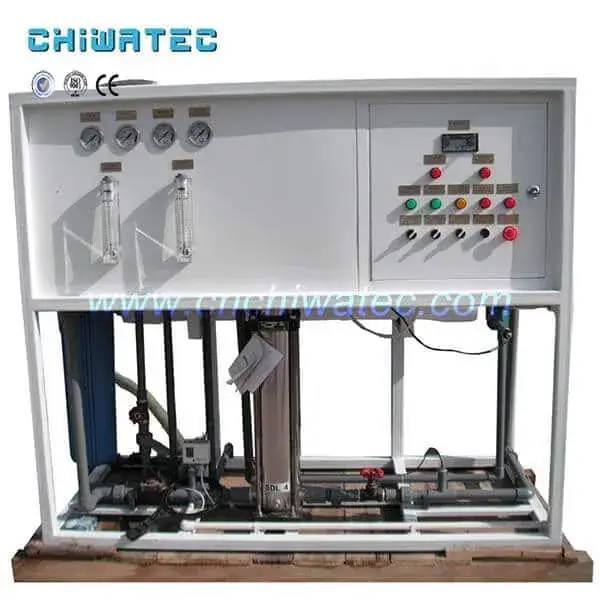
RO is the heart of the water purification process. By applying pressure greater than the osmotic pressure, water molecules are forced through a semi-permeable membrane while most contaminants are left behind.
RO membranes can remove 90%–99% of inorganic ions, heavy metals, microorganisms, and organic impurities.
RO systems are commonly used as a primary purification step before deionization, effectively extending the life of ion exchange resins.
Step 3: Ion Exchange
To achieve 18.2 MΩ·cm resistivity (ultrapure level), the water then passes through resinas de intercambio iónico.
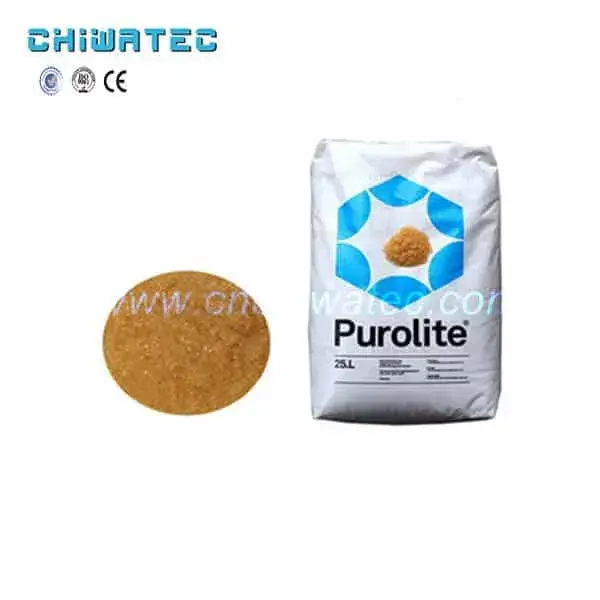
These resins replace dissolved positive ions (e.g., Ca²⁺, Mg²⁺, Na⁺) with H⁺ ions and negative ions (e.g., Cl⁻, SO₄²⁻) with OH⁻ ions, forming pure H₂O.
However, ion exchange alone cannot remove organics or microorganisms, so it is usually followed by further polishing stages.
Step 4: Post-Treatment
Depending on application requirements, the post-treatment process enhances purity by removing trace contaminants:
- Ultrafiltration (UF): Removes endotoxins and large organic molecules
- UV Oxidation (Dual-Wavelength): Reduces Total Organic Carbon (TOC) to below 5 ppb
- Microfiltration (MF): Removes bacteria and particulates
Through these stages, ultrapure water suitable for biological, medical, and analytical use is produced.
4. Ensuring the Most Stable Water Quality
Producing ultrapure water is only the first step — maintaining consistent water quality is equally important.
Stable operation requires:
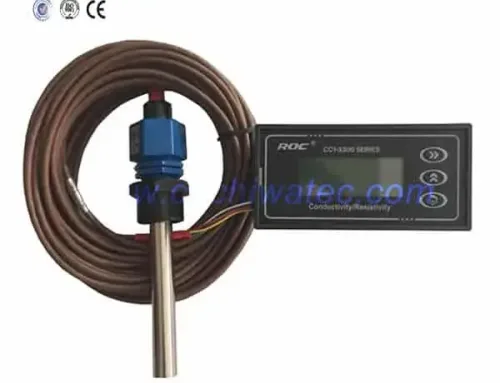
- Regular monitoring of resistivity and TOC levels
- Preventive maintenance of RO membranes and filters
- Automatic system sanitization and circulation to prevent microbial growth
High-end ultrapure water systems now include real-time monitoring, automatic flushing, and membrane protection features, ensuring continuous, high-quality water production with minimal downtime.
Conclusión
los application and preparation of pure water and ultrapure water are vital to modern scientific research, healthcare, and high-precision industries.
Through advanced purification technologies — including reverse osmosis, ion exchange, ultrafiltration, and UV oxidation — it is possible to achieve the stringent water quality standards required for analytical accuracy and industrial reliability.
Choosing a well-designed and properly maintained ultrapure water system ensures long-term stability, lower operating costs, and maximum research performance.
FAQ
Q1: What is the difference between pure water and ultrapure water?
Pure water is typically produced through reverse osmosis and has low ionic and particulate content. Ultrapure water undergoes additional ion exchange, UV, and ultrafiltration processes to remove nearly all impurities, achieving resistivity up to 18.2 MΩ·cm.
Q2: How often should an ultrapure water system be maintained?
Maintenance frequency depends on usage and feed water quality. Generally, pre-filters should be replaced every 3–6 months, and RO membranes or resins every 1–2 years.
Q3: What industries use ultrapure water?
Ultrapure water is essential in semiconductors, pharmaceuticals, biotechnology, healthcare, and analytical laboratories.
Q4: Can tap water be used as a feed source for ultrapure water systems?
Yes, but it must first pass through pre-treatment and reverse osmosis stages to remove chlorine, hardness, and suspended solids before ion exchange.
Q5: Why is UV oxidation important in ultrapure water preparation?
UV oxidation destroys organic molecules and microorganisms, significantly reducing Total Organic Carbon (TOC) levels, which is critical for sensitive analytical or biological applications.
Xian CHIWATEC Water Treatment Technology es una empresa de alta tecnología especializada en varios dispositivos de procesamiento de agua. Aparte de estos productos individuales, que cubren una serie de tipos y series, también podemos ayudar con proyectos de ingeniería integrales relacionados. Gracias a nuestro arduo trabajo y dedicación desde nuestra fundación, ahora somos uno de los fabricantes de equipos de tratamiento de agua de más rápido desarrollo en el oeste de China.
Otras lecturas:
SÍGANOS
¿Tiene un proyecto de tratamiento de agua con el que podamos ayudar?
* Diseño, mecanizado, instalación, puesta en marcha, personalización y servicio integral
 Spanish
  English
  Portuguese