Reverse Osmosis Desalination Technology: Applications, Improvements & Best Practices 2026
Meta Description: Comprehensive guide to reverse osmosis desalination technology applications, system improvements, and optimization strategies. Learn about RO membrane fouling prevention, pretreatment enhancements, and operational best practices for 2026 water treatment systems.
Introduction: The Evolution of Reverse Osmosis Desalination
Reverse osmosis desalination technology has become the dominant method for converting seawater and brackish water into potable water, accounting for over 65% of global desalination capacity in 2026. The global RO desalination market is projected to reach $27.4 billion by 2026, driven by water scarcity concerns and technological advancements that have reduced energy consumption by 40% compared to 2010 baseline systems.
Reverse osmosis desalination employs a physical separation process without phase change, offering significant advantages over traditional thermal desalination methods: simplified system architecture, convenient operation, reduced operating costs, elimination of acid/alkali consumption, minimal corrosion issues, and substantially lower environmental impact. The process delivers consistent product water quality without fluctuations, ensuring stable downstream processing and distribution.
This comprehensive guide examines real-world RO desalination system improvements, pretreatment optimization strategies, membrane fouling prevention techniques, and operational best practices based on extensive field implementation data.
Core Components of Reverse Osmosis Desalination Systems
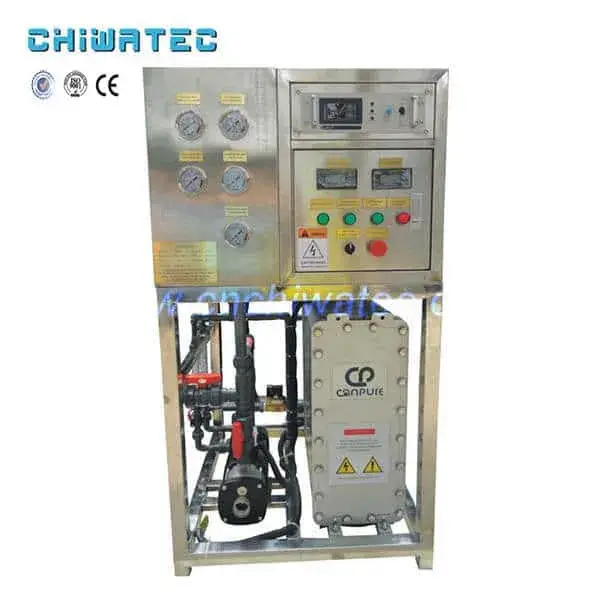
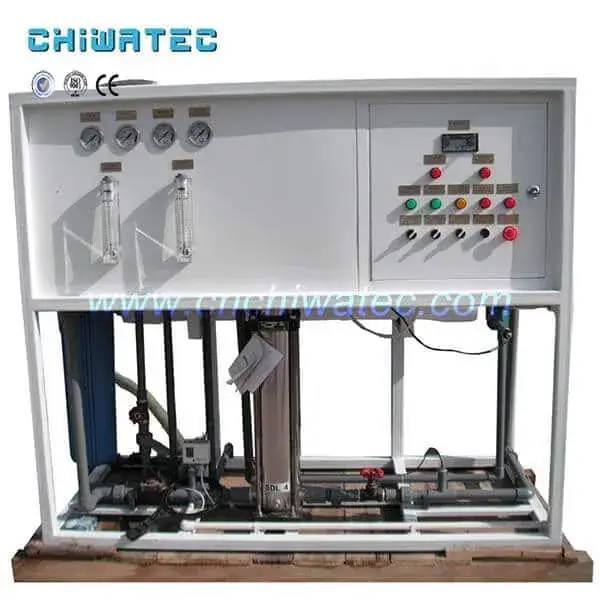
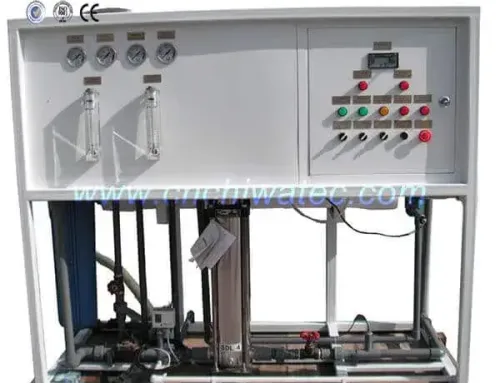
A complete tratamiento de agua por osmosis inversa system consists of four primary subsystems, each critical to overall performance and longevity:
1. Pretreatment System
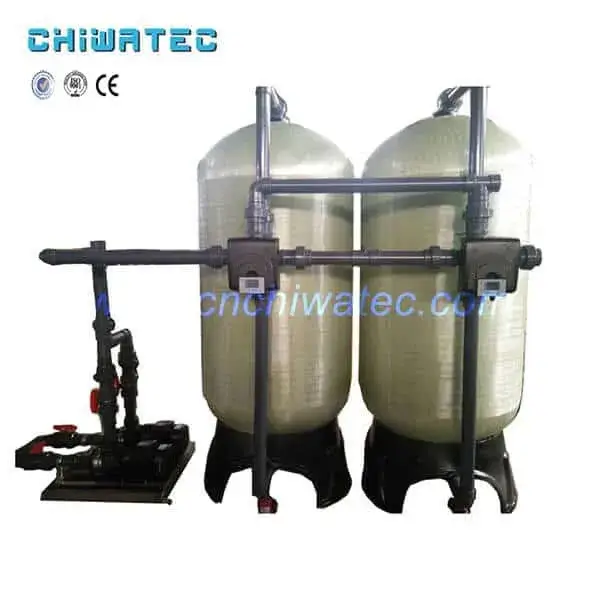
Pretreatment protects RO membranes from fouling, scaling, and chemical degradation:
- Multimedia filtration: Removes suspended solids, turbidity, and particulate matter
- Activated carbon filtration: Eliminates residual chlorine, organic compounds, and taste/odor contaminants
- Ultrafiltration (UF): Provides SDI <3.0, 99.9% particle removal for high-fouling feedwater
- Antiscalant dosing: Prevents calcium carbonate, calcium sulfate, and silica scaling
- pH adjustment: Optimizes feedwater chemistry for maximum salt rejection
2. High-Pressure Pumping System
Provides the driving force for reverse osmosis separation:
- Brackish water RO: 150-400 psi operating pressure
- Seawater RO: 800-1000 psi operating pressure
- Energy recovery devices (ERD): 95-98% efficiency, reducing energy consumption by 50-60%
- Variable frequency drives (VFD): Precise pressure control and soft-start capability
3. RO Membrane Array
Core separation element where desalination occurs:
- Thin-film composite (TFC) membranes: 99.5-99.8% salt rejection
- Anti-fouling membranes: Enhanced surface smoothness, reduced biofouling
- Low-pressure membranes: 20-30% energy reduction for brackish applications
- Membrane configuration: Spiral-wound elements in pressure vessels
4. Post-Treatment System
Conditions permeate for distribution and use:
- Remineralization: Adds calcium and bicarbonate for corrosion control
- pH adjustment: Stabilizes water chemistry for distribution
- Desinfección: UV or chlorine for microbial control
- Degassing: Removes dissolved CO₂ and other gases
Critical System Improvements: Field-Proven Optimization Strategies
Based on extensive operational data and system retrofits, the following improvements have demonstrated measurable performance gains in reverse osmosis desalination applications:
1. Enhanced Iron Removal Through Manganese Sand Filtration
Challenge: Raw water iron content fluctuating up to 0.60 ppm, exceeding RO membrane tolerance of 0.10 ppm maximum.
Solution: Addition of 400mm high-quality natural manganese sand (0.5-0.6mm particle size) to existing sand filter media.
Mecanismo: Manganese dioxide (MnO₂) catalyzes oxidation of ferrous iron (Fe²⁺) to ferric iron (Fe³⁺):
- 4MnO₂ + 3O₂ → 2Mn₂O₇
- Mn₂O₇ + 6Fe²⁺ + 3H₂O → 2MnO₂ + 6Fe³⁺ + 6OH⁻
- Fe³⁺ hydrolyzes to form insoluble Fe(OH)₃ precipitate
Results: Post-retrofit iron content at sand filter outlet consistently below 0.04 ppm, meeting RO membrane influent requirements and preventing membrane channel blockage.
2. Ultrafiltration Operation Mode Optimization
Challenge: Concentration polarization and membrane fouling reducing UF flux and increasing cleaning frequency.
Solution: Dual improvements to UF operation:
- Increased cross-flow velocity: Connected raw water network directly to pump suction, increasing inlet flow rate and membrane surface velocity to reduce concentration polarization layer thickness
- Enhanced cleaning protocol: Added automatic rapid surface flushing in addition to standard backwashing
Results: Increased ultrafiltration permeation flux, reduced chemical cleaning frequency by 40-50%, extended UF membrane element lifespan.
3. RO System Configuration and Flux Distribution Balancing
Challenge: Uneven water flux distribution in multi-stage RO arrays causing front-end membrane overload and reduced overall salt rejection.
Problem Analysis: Original 5×3 array configuration had first-stage membranes accounting for 62.5% of total elements but producing 85% of total permeate (34.0 t/h). This created excessive front-end flux, concentration polarization, and accelerated fouling.
Solution: System redesign with parallel configuration:
- Split original 5×3 arrangement into two parallel 3×1 arrays
- Installed pressure gauges and manual regulating valves between stage outlets
- Applied back pressure method to balance inter-stage flux distribution
- Added 0.02 MPa back pressure on first-stage permeate
Results: Achieved target 75%/25% permeate distribution ratio, improved product water quality, increased system desalination rate to 98.6%.
4. Feed Water pH Adjustment for CO₂ Removal
Challenge: Dissolved CO₂ permeates RO membranes at nearly 100%, reducing product water quality and increasing downstream mixed bed load.
Solution: pH adjustment to 8.2-8.3 before RO membrane:
- Adds NaOH to convert dissolved CO₂ to bicarbonate (HCO₃⁻)
- Bicarbonate rejection >95% at pH 8.2-8.3 vs. near-zero CO₂ rejection
- Eliminated RO product water tank to prevent atmospheric CO₂ reabsorption
- Installed double-liquid caustic respirator on demineralized water tank
Results: Enhanced RO desalination rate, reduced mixed bed ion exchange burden, improved final product water quality.
5. Shutdown Pure Water Flushing Protocol
Challenge: Membrane fouling acceleration during system shutdown due to stagnant concentrate and pollutant adsorption.
Solution: Implemented forward osmosis flushing using mixed bed outlet pure water:
- Introduces low-TDS pure water to displace concentrate from membrane surface
- Creates osmotic gradient drawing pollutants out of membrane pores
- Reduces concentration polarization during shutdown
- Prevents adsorbed contaminants from hardening on membrane surface
Results: Extended cleaning intervals, reduced irreversible fouling, maintained consistent flux between cleaning cycles.
6. Anti-Fouling Membrane Selection
Challenge: Bacterial and microbial fouling on standard RO membranes despite pretreatment, especially with surface water feed.
Solution: Upgraded to DOW FILMTEC BW30-365FR anti-fouling membrane:
- Enhanced surface smoothness: 40% smoother than standard membranes
- Optimized feed channel design: Highly turbulent flow reduces pollutant deposition
- Wider feed channels: Improved debris passage, reduced clogging
- Increased membrane count, shortened length: Better flux distribution
Results: System operated continuously for 12+ months without chemical cleaning (vs. 50-day cleaning cycle with standard membranes), reduced energy consumption, extended membrane lifespan.
7. Mixed Bed Constant Flow Operation
Challenge: Fluctuating downstream demand causing variable mixed bed flow rates, reducing ion exchange efficiency and resin working capacity.
Solution: Installed recirculation pipeline with automatic regulating valve:
- Maintains mixed bed flow rate at 30-40 m/h regardless of demand
- Excess flow returns to desalinated water tank via circulation loop
- Optimizes resin liquid film thickness and ion diffusion rate
Results: Mixed bed fixed yield increased from 3,600-4,000 tons to approximately 8,000 tons (100-120% improvement), reduced regeneration frequency, lowered chemical consumption.
Performance Comparison: Before vs. After System Improvements
| Before Renovation | After Renovation |
|---|---|
| Influent iron content up to 0.60 ppm (requirement: <0.1 ppm), causing membrane channel blockage | Added 400mm manganese sand filter; iron content controlled below 0.04 ppm |
| UF concentration polarization and membrane fouling present | Increased cross-flow velocity + automatic rapid flushing; eliminated polarization, reduced cleaning frequency |
| Uneven permeate distribution (85% from first stage) | Parallel 3×1 configuration with back pressure; achieved 75%/25% distribution, 98.6% desalination |
| RO cleaning cycle: 50 days | Anti-fouling membrane: 12+ months without cleaning |
| No shutdown flushing protocol | Pure water flushing at shutdown; reduced membrane fouling |
| Mixed bed yield: 3,600-4,000 tons | Constant flow operation; yield increased to ~8,000 tons |
2026 Industry Trends in RO Desalination Technology
The reverse osmosis desalination industry continues advancing with focus on energy efficiency, sustainability, and intelligent operations:
Energy Efficiency Innovations
- Next-generation ERD systems: Isobaric pressure exchangers achieving 98%+ efficiency
- Low-pressure RO membranes: 20-30% energy reduction for brackish water applications
- Hybrid RO-PRO systems: Pressure retarded osmosis for energy recovery from concentrate streams
- Renewable energy integration: Solar-powered and wind-powered desalination plants
Sustainability Initiatives
- Zero liquid discharge (ZLD): 95-98% water recovery with crystallizer integration
- Brine mining: Resource recovery from concentrate (lithium, magnesium, rare earth elements)
- Membrane recycling programs: End-of-life element material recovery and reuse
- Carbon-neutral desalination: Net-zero emissions through renewable energy and process optimization
Digital Transformation
- AI-powered predictive maintenance: Machine learning algorithms predict fouling 2-4 weeks in advance
- Real-time performance normalization: Automatic temperature, pressure, TDS correction
- Remote monitoring and diagnostics: Cloud-based platforms with automated alerts
- Digital twin technology: Virtual system models for optimization and operator training
Conclusion: Maximizing RO Desalination System Performance
Successful reverse osmosis desalination implementation requires holistic optimization across pretreatment, membrane selection, system configuration, and operational protocols. Key takeaways from field-proven improvements:
- Invest in robust pretreatment: Manganese sand filtration, UF pretreatment, and proper chemical dosing protect membrane investment
- Optimize flux distribution: Balanced array configuration prevents front-end overload and extends membrane life
- Select appropriate membranes: Anti-fouling membranes dramatically reduce cleaning frequency and energy consumption
- Implement shutdown protocols: Pure water flushing prevents irreversible fouling during idle periods
- Control feedwater chemistry: pH adjustment and CO₂ removal enhance desalination efficiency
- Maintain constant downstream flow: Stabilizes mixed bed operation and maximizes resin capacity
These improvements have demonstrated measurable results: 12+ month cleaning intervals (vs. 50 days), 98.6% desalination rate, 100% increase in mixed bed yield, and significantly reduced energy consumption. For new installations and retrofits, these best practices provide a proven roadmap for optimizing Sistema de tratamiento de agua por ósmosis inversa performance.
FAQ: Reverse Osmosis Desalination Technology
Q1: What is the typical desalination rate for RO systems?
A: Modern reverse osmosis desalination systems achieve 98-99.8% salt rejection depending on feedwater type. Brackish water RO: 98-99.5%. Seawater RO: 99.5-99.8%. System desalination rate depends on membrane type, array configuration, and operating conditions.
Q2: How often should RO membranes be cleaned?
A: Cleaning frequency depends on feedwater quality and pretreatment effectiveness. Standard membranes: 30-60 days. Anti-fouling membranes: 6-12+ months. Clean when normalized flux drops 10-15%, salt passage increases 10-15%, or pressure drop increases 15-20%.
Q3: What is the maximum iron content allowed for RO feedwater?
A: RO membrane manufacturers specify maximum 0.10 ppm iron in feedwater. Higher iron content causes membrane channel blockage and irreversible fouling. Manganese sand filtration can reduce iron to below 0.04 ppm.
Q4: How does pH adjustment improve RO performance?
A: Adjusting feedwater pH to 8.2-8.3 converts dissolved CO₂ to bicarbonate (HCO₃⁻), which RO membranes reject at >95% vs. near-zero CO₂ rejection. This improves desalination rate and reduces downstream polishing load.
Q5: What are the benefits of anti-fouling RO membranes?
A: Anti-fouling membranes feature 40% smoother surfaces, optimized feed channels, and enhanced turbulence. Benefits include: 2-3x longer cleaning intervals, 15-20% lower energy consumption, extended membrane lifespan, reduced chemical usage.
Q6: How can I improve mixed bed ion exchange capacity?
A: Maintain constant flow rate (30-40 m/h) using recirculation loop with automatic regulating valve. This optimizes resin liquid film thickness and ion diffusion rate, increasing fixed yield by 100-120% (from 4,000 to 8,000 tons).
Further Reading:
¿Tiene un proyecto de tratamiento de agua con el que podamos ayudar?
* Diseño, mecanizado, instalación, puesta en marcha, personalización y servicio integral
 Spanish
  English
  Portuguese