

Advantages of Reverse Osmosis Systems 2026: RO Pure Water Device Benefits & Applications
Meta Description: Discover key advantages of reverse osmosis systems in 2026. Learn RO pure water device benefits: 95%+ yield, no chemical regeneration, continuous operation, low maintenance costs for industrial water treatment.
Introduction to Reverse Osmosis Advantages
Reverse osmosis (RO) systems have become the preferred technology for high-purity water production across industries in 2026. With global RO pure water device installations exceeding 35,000 new plants annually and water treatment market value reaching $115 billion, understanding reverse osmosis advantages is essential for facility managers, engineers, and decision-makers evaluating water purification solutions.
Modern reverse osmosis pure water devices offer compelling benefits over traditional ion exchange and distillation methods: continuous operation with stable water quality, elimination of acid/alkali chemical regeneration, 95%+ water recovery rates, and significantly reduced operating costs. These RO system benefits make reverse osmosis the optimal choice for electronics manufacturing, pharmaceutical production, power generation, and municipal water treatment applications.
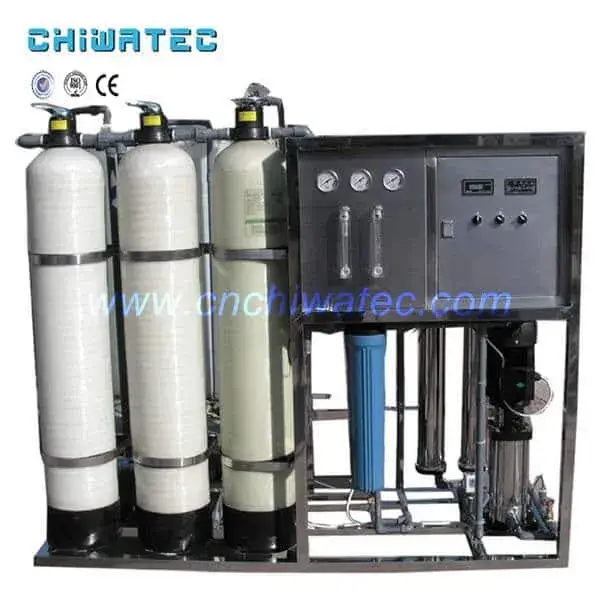
Key Advantages of Reverse Osmosis Technology
1. Continuous Operation with Stable Water Quality
RO systems deliver uninterrupted production of high-purity water with consistent quality parameters:
- 24/7 operation: No batch processing delays or regeneration downtime
- Stable TDS levels: Consistent permeate quality within ±5% variation
- Automated monitoring: Real-time conductivity, pressure, and flow tracking
- Predictable output: Reliable water quality for sensitive manufacturing processes
2. No Acid or Alkali Chemical Regeneration
Unlike traditional ion exchange systems, reverse osmosis pure water devices eliminate hazardous chemical handling:
- No acid regeneration: Eliminates HCl or H₂SO₄ storage and dosing
- No caustic regeneration: No NaOH handling requirements
- Improved workplace safety: Workers avoid exposure to corrosive chemicals
- Reduced regulatory burden: No chemical storage permits or hazardous material reporting
3. Zero Downtime for Regeneration
RO membrane systems operate continuously without regeneration cycles:
- No production interruptions: Unlike ion exchange requiring 2-4 hour regeneration cycles
- Consistent supply: Critical for pharmaceutical and electronics manufacturing
- Reduced buffer tank requirements: Less storage capacity needed
- Higher productivity: 100% operational uptime versus 80-85% for IX systems
4. Water Conservation and High Recovery Rates
Modern reverse osmosis devices maximize water efficiency:
- 95%+ water yield: Advanced systems achieve 95-98% recovery rates
- Minimal backflush water: Reduced cleaning water consumption
- No wastewater discharge: Concentrate can be recycled or minimized through ZLD
- Lower water costs: Reduced freshwater intake and discharge fees
5. Environmental Benefits: No Sewage or Chemical Discharge
RO water purification supports sustainability goals:
- No acid/alkali wastewater: Eliminates neutralization requirements
- No regenerant discharge: 90% reduction in chemical wastewater versus ion exchange
- Reduced carbon footprint: Lower energy consumption than thermal distillation
- Green certification support: Contributes to LEED and ISO 14001 compliance
6. Reduced Infrastructure and Facility Requirements
Equipos de ósmosis inversa minimizes facility footprint:
- No chemical storage buildings: Eliminates acid/alkali containment structures
- Reduced workshop area: Compact modular design saves 40-60% floor space
- Simplified plumbing: Fewer pipes, valves, and containment systems
- Lower construction costs: Reduced civil engineering requirements
7. Safe and Reliable Operation
RO pure water systems prioritize operator safety:
- No chemical exposure: Workers protected from acid/alkali burns
- Automated controls: PLC-based operation with minimal manual intervention
- Built-in safety features: High-pressure shutoff, leak detection, low-pressure protection
- Remote monitoring: Cloud-based diagnostics and alerts
8. Lower Operating and Maintenance Costs
Ventajas de la ósmosis inversa translate to significant cost savings:
- 40-60% lower OPEX: Versus traditional ion exchange systems
- Reduced chemical costs: No regeneration chemicals to purchase
- Lower labor costs: Minimal operator attention required
- Extended membrane life: 5-10 years with proper maintenance
9. Simple Installation and Low Capital Cost
RO pure water devices offer straightforward deployment:
- Modular design: Skid-mounted systems for easy installation
- Quick commissioning: Operational within days versus weeks
- Low installation cost: Reduced piping, electrical, and civil work
- Scalable capacity: Easy expansion by adding membrane modules
Overview of Reverse Osmosis (RO) Pure Water Device
How RO Pure Water Systems Work
Equipos de ósmosis inversa applies advanced membrane separation technology utilizing RO principles to effectively remove:
- Charged ions: Dissolved salts, minerals (97-99% removal)
- Inorganic substances: Heavy metals, nitrates, sulfates
- Colloidal particles: Suspended solids down to 0.0001 microns
- Bacteria and viruses: 99.9% microbiological removal
- Organic substances: TOC reduction for ultrapure water applications
Industry Applications
RO pure water devices serve as optimal equipment for high-purity water preparation across sectors:
- Electronics: Ultrapure water (18.2 MΩ·cm) for semiconductor and PCB manufacturing
- Pharmaceuticals: USP Purified Water and Water for Injection (WFI) pretreatment
- Food and beverage: Consistent product quality and ingredient standardization
- Textile and dyeing: Process water for consistent color results
- Chemical processing: Boiler feed water and process water purification
- Environmental protection: Wastewater treatment and water reuse
- Power generation: High-pressure boiler feed water (TDS <1 ppm)
Advanced Membrane Technology
Modern reverse osmosis pure water devices utilize premium composite membranes featuring:
- Low energy consumption: 3-10 kWh/m³ versus 15-25 kWh/m³ for thermal distillation
- No pollution: Chemical-free separation process
- Stable operation: Consistent performance over 5-10 year membrane life
- Low operating pressure: 150-400 PSI for brackish water applications
- High freshwater recovery: 75-95% depending on feed water quality
2026 Market Trends in RO Pure Water Systems
Market Growth and Adoption
The global reverse osmosis system market continues expanding:
- Market value: $115 billion by 2028, growing at 8.5% CAGR
- Installation rate: 35,000+ new industrial RO plants annually
- Regional leaders: Asia-Pacific (45% share), North America (28%), Europe (18%)
- Key drivers: Water scarcity, industrial growth, regulatory compliance
Technology Innovations
2026 RO pure water devices feature advanced capabilities:
- Smart monitoring: IoT sensors with AI-driven predictive maintenance
- Energy recovery: Isobaric ERDs achieving 96-98% efficiency
- Advanced membranes: TFN and graphene oxide with 50% higher flux
- Zero liquid discharge: Complete water recovery for environmental compliance
Sustainability Focus
Environmental considerations drive RO system adoption:
- Water reuse: 60-80% wastewater recycling in industrial applications
- Energy efficiency: 40% reduction in specific energy consumption since 2020
- Chemical reduction: 90% less chemical usage versus ion exchange
- Carbon neutrality: Solar-powered RO systems for off-grid applications
Conclusion: Why Choose Reverse Osmosis Pure Water Devices
los advantages of reverse osmosis make RO pure water devices the optimal choice for modern water treatment needs in 2026. From continuous operation with stable water quality to elimination of hazardous chemical regeneration, RO system benefits deliver operational excellence, cost savings, and environmental sustainability.
With 95%+ water recovery rates, 40-60% lower operating costs, and simplified facility requirements, reverse osmosis pure water devices provide compelling ROI for electronics, pharmaceutical, food and beverage, and power generation applications. As water scarcity intensifies and sustainability requirements tighten, investing in advanced RO technology positions organizations for long-term operational success.
For comprehensive system guidance, explore our RO System Operation and Maintenance Guide. Learn about water purification system principles and discover complete RO technology fundamentals.
Frequently Asked Questions (FAQ) About Reverse Osmosis Advantages
What are the main advantages of reverse osmosis over ion exchange?
RO advantages include: no chemical regeneration (eliminates acid/alkali handling), continuous operation without downtime, 40-60% lower operating costs, 95%+ water recovery, no hazardous wastewater discharge, and reduced facility footprint. Ion exchange requires 2-4 hour regeneration cycles with chemical costs and safety concerns.
How much water can reverse osmosis systems recover?
Modern RO pure water devices achieve 75-95% water recovery rates depending on feed water quality. Brackish water systems typically reach 85-95% recovery, while seawater RO achieves 40-50%. Advanced systems with concentrate recycling can exceed 98% recovery.
Do reverse osmosis systems require chemical regeneration?
No. Reverse osmosis membranes do not require chemical regeneration like ion exchange resins. RO systems operate continuously with only periodic membrane cleaning (every 3-6 months) using mild cleaning solutions. This eliminates acid/alkali storage, handling, and discharge requirements.
What is the operating cost comparison between RO and ion exchange?
RO systems typically have 40-60% lower operating costs than ion exchange. Savings come from: no chemical regeneration costs, reduced labor (minimal operator attention), lower wastewater treatment costs, and extended membrane life (5-10 years). Capital costs are comparable or lower for RO.
How safe are reverse osmosis pure water devices to operate?
RO systems are very safe with no hazardous chemical handling. Unlike ion exchange requiring acid/caustic regeneration, RO operates with electrical controls and low-pressure pre-treatment. Built-in safety features include high-pressure shutoff, leak detection, and automated alarms. Workers avoid chemical exposure risks entirely.
SÍGANOS
Do you have a water treatment project we can help with?
Designing, machining, installing, commissioning, customize and one-stop service






 Spanish
  English
  Portuguese




