UV Lamp Maintenance: Complete Guide to Ultraviolet Lamp Care and Replacement 2026
Ultraviolet (UV) water disinfection systems rely on one critical component — the UV lamp. Without proper UV lamp maintenance, even the best UV sterilizer will fail to deliver adequate disinfection, allowing harmful microorganisms to pass through untreated. Many operators discover too late that a seemingly working lamp has lost 40% or more of its output, silently compromising water quality. This guide covers everything you need to know about UV lamp maintenance — from replacement schedules and intensity monitoring to cleaning procedures and dose verification — so your UV system delivers consistent, reliable disinfection day after day. CHIWATEC specializes in industrial UV sterilization equipment and provides comprehensive maintenance support for all our UV water treatment systems.
UV Lamp Maintenance: Why Regular Care Is Essential
UV lamps are the heart of any ultraviolet disinfection system. Unlike visible light bulbs that fail by burning out, UV lamps gradually lose their ultraviolet output over time — a phenomenon called solarization. A lamp that still glows visibly may be producing insufficient UV-C radiation to inactivate bacteria, viruses, and protozoa. Regular UV lamp maintenance ensures the system delivers the minimum effective UV dose (typically 30-40 mJ/cm² for drinking water) at all times. Without maintenance, four key issues arise: reduced UV transmittance from fouled quartz sleeves, declining lamp intensity from age, inaccurate dose monitoring, and increased energy consumption as the system struggles to compensate.
UV Lamp Replacement Schedule: When to Change the Tube
| Parâmetro | New Lamp | After 12 Months | Replacement Threshold |
| UV intensity output | ~90 μW/cm² | ~54-60 μW/cm² (60-70% of new) | 70 μW/cm² minimum |
| Germicidal efficacy | 99.99% (4-log reduction) | 90-99% (1-2 log reduction) | Replace immediately below threshold |
| Recommended replacement | — | Annual (every 8,760 operating hours) | Do not exceed 9,000 hours |
UV lamps typically last 8,000 to 9,000 continuous operating hours (approximately 12 months). Frequent on-off cycling accelerates degradation far more than continuous operation — each restart stresses the lamp’s electrodes and cathodes. For systems that cycle frequently (such as intermittent industrial processes), the lamp may need replacement sooner. Key replacement indicators include: visible blackening at the lamp ends, difficulty starting, flickering during operation, and measured UV intensity below 70 μW/cm².
UV Intensity Monitoring: Performance Verification Methods
Relying on operating hours alone is insufficient for UV lamp maintenance. Two lamps with the same runtime can have vastly different residual intensities due to differences in water quality, power supply stability, and ambient temperature. Effective monitoring requires:
- Online UV intensity sensors — Installed downstream of the UV lamp, these sensors provide continuous real-time readings of UV dose delivered to the water. Modern systems trigger an automatic alarm when intensity drops below the set threshold.
- Portable UV radiometers — Handheld meters that measure UV-C output at the quartz sleeve surface. Recommended for monthly spot-checking in smaller systems without online monitoring.
- Bioassay validation — Periodic challenge testing using a surrogate microorganism (such as MS2 bacteriophage) to verify the system achieves its validated log reduction. Required annually for regulatory compliance in municipal and food/beverage applications.
UV Lamp Cleaning: Frequency, Methods and Best Practices
Water passing through UV disinfection equipment contains suspended solids (SS), dissolved minerals, and organic matter. These contaminants deposit on the outer surface of the UV lamp’s quartz sleeve, forming a fouling layer that blocks UV transmission. Even a 0.1 mm biofilm can reduce UV transmittance by 50% or more. Cleaning frequency depends on influent water quality:
| Water Quality | TSS (mg/L) | Hardness (mg/L) | Recommended Cleaning Interval |
| Municipal / drinking water | <5 | <120 | Every 3-6 months |
| Surface water / well water | 5-20 | 120-250 | Every 1-3 months |
| Industrial / wastewater effluent | 20-50 | >250 | Every 2-4 weeks |
Cleaning procedure: First, turn off the UV system and allow the lamp to cool for at least 10 minutes. Remove the lamp assembly and carefully wipe the quartz sleeve with a soft, lint-free cloth moistened with a mild acid solution (typically citric or phosphoric acid at 5-10% concentration). For tenacious scale deposits, a specialized UV quartz sleeve cleaning solution is recommended. Rinse thoroughly with deionized water and reinstall. Never use abrasive materials — scratches on the quartz sleeve create shadow areas where UV cannot penetrate.
UV Dose Measurement: Using Intensity Meters Effectively
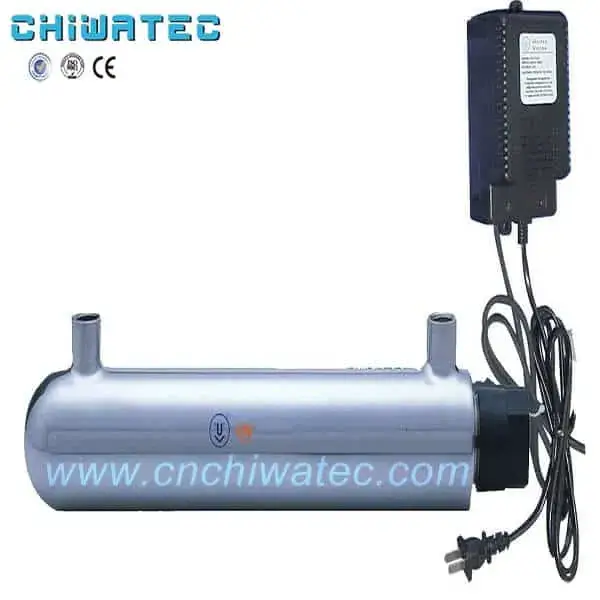
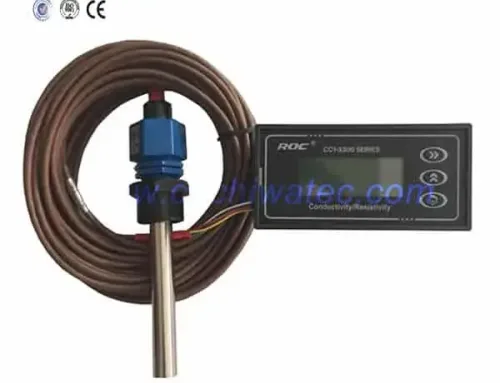
A UV intensity meter is the most direct tool for assessing UV lamp maintenance needs. The meter measures the UV dose (in μW·s/cm²) reaching the water body through the quartz sleeve. A healthy new lamp should read approximately 90 μW/cm² at the sensor. When the reading drops to 70 μW/cm² or below, cleaning is required. If cleaning does not restore the reading above 70 μW/cm², lamp replacement is necessary. Key factors affecting UV dose measurement include: water UV transmittance (UVT), flow rate, lamp age, quartz sleeve cleanliness, and sensor calibration. Regular sensor calibration (annually) is essential for accurate readings.
Factors Affecting UV Lamp Lifespan
- Switching frequency — Each on-off cycle causes thermal expansion stress on the lamp electrodes. Frequent cycling (more than 3-4 times per day) can halve the effective lamp life compared to continuous operation.
- Operating temperature — UV lamps achieve peak output at 40-50°C. Operating outside this range (below 20°C or above 80°C) reduces UV-C efficiency by 15-30%.
- Power supply quality — Voltage fluctuations exceeding ±10% of rated voltage stress the lamp ballast and reduce UV output. Use a voltage stabilizer in areas with unstable grid power.
- Water temperature — Higher water temperatures (above 40°C) accelerate quartz sleeve scaling and reduce UV transmittance.
- Air quality around the lamp housing — Dust, humidity, and corrosive gases can damage lamp connectors and the ballast over time.
Common UV Lamp Problems and Troubleshooting
| Problem | Probable Cause | Solution |
| Lamp does not light | Ballast failure, loose connection, or end-of-life lamp | Check ballast; inspect connections; replace lamp |
| Low UV intensity | Fouled quartz sleeve, lamp beyond 12 months, low UVT | Clean sleeve; replace lamp; check incoming water UVT |
| Lamp flickers | Loose socket connection or ballast degradation | Tighten connections; test ballast output |
| Blackened lamp ends | Normal aging — indicates end-of-life | Replace lamp immediately |
| Alarm keeps sounding | Intensity below threshold; dirty sleeve or expired lamp | Clean sleeve; if alarm persists, replace lamp |
| Water tastes/smells after UV | Possible photo-oxidation of organic matter or lamp overheating water | Check flow rate; verify UV dose is correct; install post-carbon filter |
Frequently Asked Questions
How often should UV lamps be replaced?
Most UV lamps should be replaced annually (every 8,000-9,000 operating hours). Even if the lamp still glows, its UV-C output degrades over time. Annual replacement ensures consistent disinfection performance. For industrial systems, some operators schedule replacement every 8,760 hours during annual maintenance shutdowns.
Can I clean a UV lamp instead of replacing it?
Cleaning the quartz sleeve removes surface fouling and restores UV transmission, but it does not restore the lamp’s inherent UV output intensity. A lamp that has been in service for 12+ months has already lost 30-40% of its original output due to solarization of the glass and electrode wear. Cleaning is a maintenance step between replacements — not a substitute for replacement.
How do I know if my UV lamp needs maintenance?
The most reliable indicator is a UV intensity meter reading. If the reading drops below 70 μW/cm², perform cleaning first. If cleaning restores the reading above 70 μW/cm², the lamp is still usable. If the reading remains below threshold after cleaning, replace the lamp. Visual indicators (black lamp ends, flickering, persistent alarm) also signal that UV lamp maintenance is due.
What is the difference between UV lamp maintenance and UV system maintenance?
UV lamp maintenance specifically covers the lamp, quartz sleeve, and intensity monitoring components. UV system maintenance includes the entire system — the lamp, ballast, UV reactor chamber, wiper mechanism (if equipped), control panel, flow switches, and any upstream pre-filtration equipment. A comprehensive maintenance program covers both.
Does frequent on-off cycling really damage UV lamps?
Yes. Each start-up cycle sends a high-voltage surge through the lamp’s cold electrodes, causing thermal shock and material wear. Studies show that lamps subjected to more than 4 on-off cycles per day can have their effective lifespan reduced by 40-50%. Where possible, operate UV lamps continuously rather than cycling them with the water pump.
Conclusion & Call to Action
Effective UV lamp maintenance is not optional — it is the foundation of reliable ultraviolet disinfection. By following a structured maintenance program that includes annual lamp replacement, regular quartz sleeve cleaning, continuous intensity monitoring, and periodic dose validation, you ensure your UV system delivers consistent, verified disinfection performance. Whether you operate a small UV sterilizer for point-of-use treatment or a multi-lamp industrial UV system for process water, a proactive maintenance approach protects your water quality and extends equipment life.
Need help setting up a UV lamp maintenance schedule for your water treatment system? Contact the CHIWATEC team for expert guidance and replacement parts. Email us at [email protected] ou [email protected] for a customized maintenance plan and UV lamp replacement recommendations.
Related Resources and Further Reading
Você tem um projeto de tratamento de água que podemos ajudar
* Projetar, usinar, instalar, comissionar, personalizar e serviço de balcão único
 Portuguese
  English
  Spanish