UV Disinfection Benefits: 6 Key Advantages of Ultraviolet Water Treatment 2026
Understanding ultraviolet disinfection benefits in water treatment helps water professionals select the right disinfection technology for their application. UV disinfection offers unique advantages over chemical methods — faster inactivation, safer operation, no harmful residuals, and minimal footprint. This guide examines the six key ultraviolet disinfection benefits in water treatment and compares UV technology with traditional chemical disinfection. CHIWATEC supplies industrial UV sterilization systems for water, wastewater, and process treatment applications worldwide.
Ultraviolet Disinfection Benefits in Water Treatment — An Overview
The six key ultraviolet disinfection benefits in water treatment cover microbial efficacy, operational safety, environmental impact, and system economics. Below is a summary:
| # | Advantage | Impact on Water Treatment |
|---|---|---|
| 1 | Fast, high-efficiency disinfection | Kills 99.99% of bacteria, viruses, and spores in seconds |
| 2 | Physical process — no chemicals | Eliminates handling, storage, and transport of hazardous chemicals |
| 3 | No harmful residual effects | No disinfection byproducts (DBPs) or toxic residuals |
| 4 | Easy operation and automation | Simple on/off control, low operator attention required |
| 5 | Short contact time, compact footprint | 0.5-minute exposure, up to 80% less space than chlorine contact |
| 6 | No effect on water properties | Preserves taste, odor, pH, and chemical composition |
Each of these ultraviolet disinfection benefits in water treatment contributes to the growing adoption of UV technology across municipal, industrial, and commercial water systems.
Advantage 1: Fast and Highly Effective Microbial Inactivation
UV disinfection achieves rapid microbial kill through physical DNA damage — UV-C light at 254 nm penetrates the cell wall of microorganisms and disrupts their genetic material, preventing reproduction.
- Speed: Inactivation occurs within 0.5–10 seconds of exposure, depending on UV dose and organism type
- Efficacy: UV can achieve 4-log (99.99%) reduction of bacteria such as E. coli, with average removal rates reaching 98% for E. coli and 96.6% for total bacterial count
- Broad spectrum: UV effectively kills bacteria, viruses, bacterial spores, and protozoa (including chlorine-resistant Cryptosporidium and Giardia)
- Spore removal: Unlike chlorine, which struggles with certain spore-forming organisms, UV can inactivate bacterial spores and viruses that are difficult to kill with liquid chlorine
This superior microbial efficacy is one of the primary ultraviolet disinfection benefits in water treatment, particularly for applications requiring high-log reduction of resistant pathogens.
Advantage 2: Safe Physical Process Without Hazardous Chemicals
UV disinfection is a purely physical process — it uses light, not chemicals, to inactivate microorganisms. This eliminates multiple safety and operational risks associated with chemical disinfection:
- No chemical handling: Eliminates the danger of transporting, storing, and handling chlorine gas, chlorine dioxide, or ozone — all of which pose serious health and safety risks
- No corrosion risk: Chemical disinfectants are corrosive to piping, valves, and equipment. UV systems have no chemical corrosion impact on downstream infrastructure
- Urban safety: Many water and wastewater treatment plants are located in densely populated areas. Chlorine gas leaks from storage tanks or transport accidents can have catastrophic consequences for surrounding communities
- Simplified logistics: Chemical disinfectants require complex production, procurement, and transportation logistics. UV systems only need electrical power and periodic lamp replacement
This safety advantage is one of the most compelling ultraviolet disinfection benefits in water treatment, particularly for facilities in urban or sensitive locations.
Advantage 3: No Harmful Residual Effects on Humans or Aquatic Life
Unlike chemical disinfection methods, UV leaves no residual byproducts in the treated water:
- No DBPs: Chlorine disinfection produces disinfection byproducts (DBPs) such as trihalomethanes (THMs) and haloacetic acids (HAAs), which are carcinogenic and regulated by health authorities worldwide
- No secondary pollution: UV does not introduce any chemical compounds into the water — it simply passes through, inactivates microorganisms, and leaves no trace
- Aquatic safety: Treated water discharged to receiving water bodies contains no residual disinfectant that could harm fish, plants, or other aquatic organisms
- Worker safety: Operators are not exposed to toxic chemicals, reducing occupational health risks and personal protective equipment requirements
For applications where downstream water quality is critical — such as drinking water, food processing, or environmentally sensitive discharge — the absence of chemical residuals is a decisive ultraviolet disinfection benefit in water treatment.
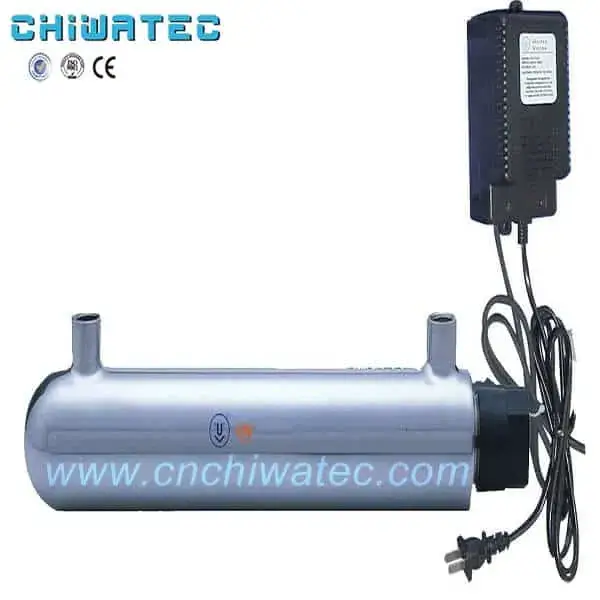
Advantage 4: Easy Operation and Full Automation Capability
UV disinfection systems are inherently simple to operate compared to chemical dosing systems:
- Simple control: UV systems operate on an on/off basis — no chemical feed pumps, mixing tanks, or residual monitoring required
- Low operator attention: Modern UV systems include automatic wiper cleaning, lamp intensity monitoring, and flow-proportional dosing through variable power output
- Automation ready: UV systems integrate easily with SCADA and PLC systems for fully automated operation, including start/stop sequencing, alarm notification, and data logging
- Minimal training: Operators can be trained on UV system operation in hours rather than the days or weeks required for chemical disinfection systems
For facilities with limited operator resources, these operational ultraviolet disinfection benefits in water treatment translate directly to lower labor costs and fewer operator errors.
Advantage 5: Short Contact Time and Minimal Space Requirements
UV disinfection requires significantly less contact time and physical space than chemical alternatives:
| Parâmetro | UV Disinfection | Chlorine Disinfection |
|---|---|---|
| Contact Time | 0.5–10 seconds | 30–60 minutes |
| Footprint | Compact chamber or channel | Large contact tank or basin |
| Space Savings | Up to 80% less space | Baseline |
| Hydraulic Retention | Seconds | Minutes to hours |
- Space savings: The short contact time means UV systems require 50–80% less floor space than chlorine contact tanks, saving on building and civil construction costs
- Retrofit friendly: UV systems can often be installed in existing pipeline sections, eliminating the need for new concrete basins
- Scalable: Additional UV modules can be added in parallel as flow rates increase
For space-constrained facilities, the compact footprint is one of the most practical ultraviolet disinfection benefits in water treatment.
Advantage 6: No Effect on Water’s Physical or Chemical Properties
Unlike chemical disinfectants that alter water chemistry, UV treatment preserves the natural water quality:
- No chemical addition: UV does not add any compounds to the water — treated water contains no residual disinfectant, reaction byproducts, or altered mineral composition
- Taste and odor preserved: UV does not produce the chlorinous taste or odor associated with chlorine disinfection, making it ideal for drinking water and food/beverage applications
- pH unchanged: Water pH is completely unaffected by UV treatment, unlike chlorine (which can shift pH) or ozone (which can lower pH through oxidation byproducts)
- No chemical consumption: Unlike chlorine, which is consumed reacting with organic matter (chlorine demand), UV effectiveness does not diminish based on water chemistry — only UV transmittance matters
For applications where water quality preservation is paramount, this is a critical ultraviolet disinfection benefit in water treatment.
UV Disinfection vs Chemical Disinfection: Comparison Summary
The table below compares UV disinfection with chlorine, the most common chemical alternative, across key decision factors:
| Factor | UV Disinfection | Chlorine Disinfection |
|---|---|---|
| Mechanism | Physical (DNA damage by light) | Chemical (oxidation by chlorine) |
| Contact Time | 0.5–10 sec | 30–60 min |
| Cryptosporidium | Effective | Ineffective |
| Residual Protection | None (requires chlorine residual) | Long-lasting residual |
| Safety Risk | Low (UV light only) | High (toxic gas/liquid) |
| Byproducts | None | THMs, HAAs, chloramines |
| Space Required | Small | Large |
| Operating Cost | Electricity + lamp replacement | Chemical purchase + transport |
Note: For systems requiring residual disinfection in distribution networks, UV is often paired with a small chlorine dose — combining the ultraviolet disinfection benefits in water treatment with the residual protection of chlorine.
Frequently Asked Questions
Q1: What are the main ultraviolet disinfection benefits in water treatment?
The six main ultraviolet disinfection benefits in water treatment are: fast microbial inactivation (seconds), safe physical process without chemicals, no harmful residuals or DBPs, easy operation and automation, compact footprint with short contact time, and preservation of natural water properties.
Q2: How fast does UV disinfection work compared to chlorine?
UV disinfection works in 0.5–10 seconds, while chlorine requires 30–60 minutes of contact time. This makes UV ideal for high-flow applications where space is limited and rapid treatment is needed. E. coli removal rates with UV average 98%, with total bacterial count removal at 96.6%.
Q3: Does UV disinfection remove chlorine from water?
UV disinfection does not remove chlorine — it inactivates microorganisms using light. For systems that need both disinfection and chlorine removal (e.g., RO pretreatment), a separate dechlorination step (activated carbon or chemical dosing) is required before the RO membranes.
Q4: Can UV disinfection replace chlorine completely?
UV can replace chlorine for primary disinfection in many applications, but it does not provide a residual disinfectant. For drinking water distribution systems, a small chlorine residual is typically maintained after UV treatment to prevent regrowth in pipes. For wastewater, UV alone is often sufficient for discharge.
Q5: Is UV disinfection safe for operators?
Yes. UV disinfection is significantly safer than chemical methods. There is no risk of toxic gas leaks, chemical burns, or hazardous material spills. Operators need only follow standard electrical safety practices and avoid direct exposure to UV-C light, which can cause skin and eye irritation.
Conclusion & Call to Action
o ultraviolet disinfection benefits in water treatment — fast microbial inactivation, chemical-free operation, no harmful residuals, simple automation, compact footprint, and preserved water quality — make UV technology a versatile and sustainable choice for a wide range of applications. When combined with proper pretreatment and, where needed, a small chlorine residual for distribution, UV provides a complete disinfection solution. For expert guidance on UV disinfection system selection and design, contact CHIWATEC today. Email us at [email protected] ou [email protected] for a free consultation and equipment quotation.
Você tem um projeto de tratamento de água que podemos ajudar
* Projetar, usinar, instalar, comissionar, personalizar e serviço de balcão único
 Portuguese
  English
  Spanish