Ultrafiltration Chemical Cleaning System: Complete CIP Protocol Guide 2026
Maintaining ultrafiltration membrane performance through effective chemical cleaning? This comprehensive guide covers the complete UF chemical cleaning system — from CIP (Clean-in-Place) protocols and chemical selection to cleaning frequency optimization and troubleshooting. Featuring operational parameters for alkali, acid, and oxidant cleaning cycles with data-driven maintenance strategies for 2026.
*Last Updated: May 2026 | Industry-Verified Technical Data*
Why This Guide Matters
The global ultrafiltration membrane market is projected to reach USD 4.8 billion by 2032, with over 100,000 UF installations operating worldwide. Effective chemical cleaning is the single most important factor in achieving design membrane lifespans of 5-10 years, yet improper cleaning protocols account for 40% of premature membrane replacement cases. CHIWATEC designs and manufactures UF water purification equipment with integrated chemical cleaning systems that optimize chemical consumption while maximizing flux recovery. This guide provides a practical framework for designing and operating UF chemical cleaning systems across municipal and industrial applications.
Key Industry Trends (2026 Update)
- Automated CIP systems — Over 75% of new UF installations feature fully automated chemical cleaning systems with programmable recipes for alkali, acid, and oxidant cycles, reducing operator intervention by 80% and improving cleaning consistency.
- Chemical optimization analytics — AI-driven CIP scheduling based on transmembrane pressure (TMP) trends and flux decline patterns has reduced chemical consumption by 20-35% while maintaining membrane cleanliness in large-scale UF plants.
- Temperature-controlled cleaning — Heated CIP systems operating at 35-40 degrees C achieve 40-60% better flux recovery than ambient-temperature cleaning for organic-fouled membranes, with energy costs partially offset by reduced chemical dosage requirements.
- Green cleaning chemistry — Enzymatic and bio-based cleaning agents for UF membranes have entered commercial application, showing 90-95% flux recovery for protein and polysaccharide fouling with biodegradable, non-hazardous formulations that simplify waste handling.
1. When Is Chemical Cleaning Required for UF Membranes?
TMP-Based Triggers
Chemical cleaning of ultrafiltration membranes becomes necessary when the transmembrane pressure difference (TMP) remains higher than the set value after a standard hydraulic backwash. The primary trigger for initiating chemical cleaning is: TMP after backwash exceeds 80-100% of the initial clean-water TMP, or normalized specific flux drops below 80% of the baseline value. For most UF systems operating at 0.5-2.0 bar TMP, a sustained post-backwash TMP above 1.2-1.5 bar indicates that chemical cleaning is needed.
Time-Based and Performance-Based Triggers
While TMP-based triggers are preferred for optimizing chemical usage, time-based cleaning schedules serve as a useful backup. Typical CIP frequency ranges from monthly for surface water treatment with good pretreatment to weekly for challenging applications like wastewater MBR effluent or high-organic surface waters. The most reliable approach is performance-based CIP scheduling: clean when TMP recovery from backwash falls below 60%, not on a fixed calendar schedule. UF CEB dispersed cleaning system provides complementary guidance on the daily-to-weekly chemically enhanced backwash that extends intervals between intensive CIP events.
2. What Chemicals Are Used in UF Chemical Cleaning?
Alkaline Cleaning (Organic Fouling)
Alkaline cleaning using sodium hydroxide (NaOH) at pH 10-12, typically combined with sodium hypochlorite (NaClO) at 200-1000 mg/L as free chlorine, is the primary cleaning approach for organic fouling removal. The alkali hydrolyzes and dissolves organic compounds, while the oxidant breaks down polysaccharides, proteins, and humic substances. A standard alkaline CIP cycle operates at 30-40 degrees C for 60-120 minutes with recirculation followed by 30-60 minutes soaking and final rinse.
Acid Cleaning (Inorganic Scaling)
Acid cleaning using citric acid (1-2% w/w) or hydrochloric acid (pH 2-3) targets inorganic scale removal including calcium carbonate, iron hydroxide, manganese oxides, and metal silicate deposits. The acid CIP cycle typically follows the alkaline cycle when combined fouling (organic + inorganic) is present. Operating at 30-40 degrees C for 30-60 minutes, acid cleaning dissolves precipitated scales and restores membrane permeability affected by inorganic fouling.
Oxidant and Specialized Cleaners
For persistent biological fouling or biofilms, enhanced oxidant cleaning with higher chlorine concentrations (1000-2000 mg/L) or hydrogen peroxide (0.5-1% v/v) may be employed. Specialized enzymatic cleaners targeting specific foulant types — proteases for protein fouling, lipases for oil/grease, amylases for polysaccharides — are increasingly available for applications where conventional chemical cleaning is ineffective or where chemical discharge restrictions apply. Processo de membrana de ultrafiltração na aplicação de tratamento de água discusses foulant characterization methods that inform chemical selection decisions.
3. What Is the Standard CIP Sequence for UF Systems?
Complete CIP Protocol
A standard UF chemical cleaning (CIP) cycle follows a sequence: (1) Drain and flush — drain the UF system and flush with feed water for 5-10 minutes to remove loose solids; (2) Alkaline cleaning solution preparation — mix the alkali/oxidant solution at the target concentration and temperature in the CIP tank; (3) Recirculation — circulate the cleaning solution through the UF system at 50-70% of design permeate flow rate for 60-120 minutes; (4) Soak — stop recirculation and allow soaking for 30-60 minutes for chemical penetration of adherent foulants; (5) Drain and rinse — drain the cleaning solution and rinse with product or feed water until neutral pH is achieved; (6) Acid cleaning (if needed) — repeat steps 2-5 with acid solution; (7) Final rinse and return to service — rinse until pH and conductivity return to normal operating range, then resume filtration.
Temperature and Flow Rate Control
Optimal CIP temperature is 30-40 degrees C — higher temperatures improve reaction kinetics and cleaning effectiveness, but temperatures above 45 degrees C may damage PVDF membranes or accelerate corrosion of system components. The recirculation flow rate should generate a cross-flow velocity of 1-2 m/s across membrane fibers, sufficient to create shear forces that dislodge loosened foulants without excessive pressure drop.
4. How to Size and Design a UF Chemical Cleaning System?
CIP System Components
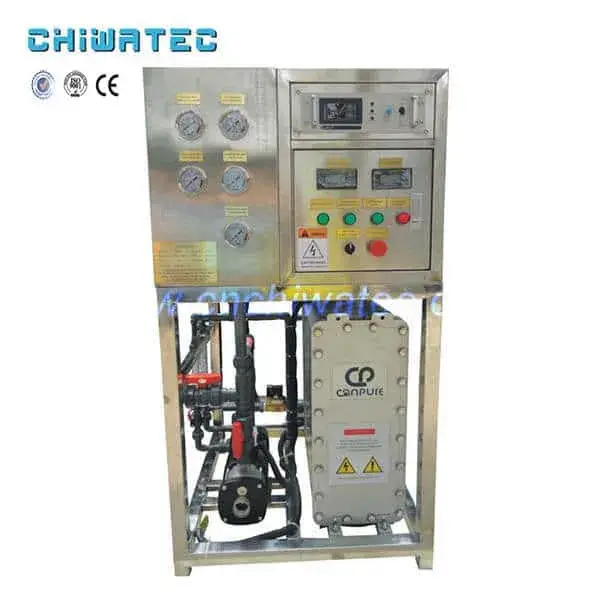
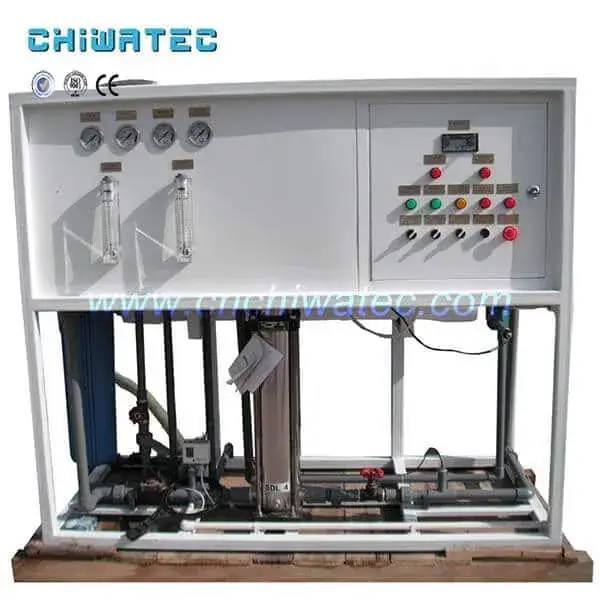
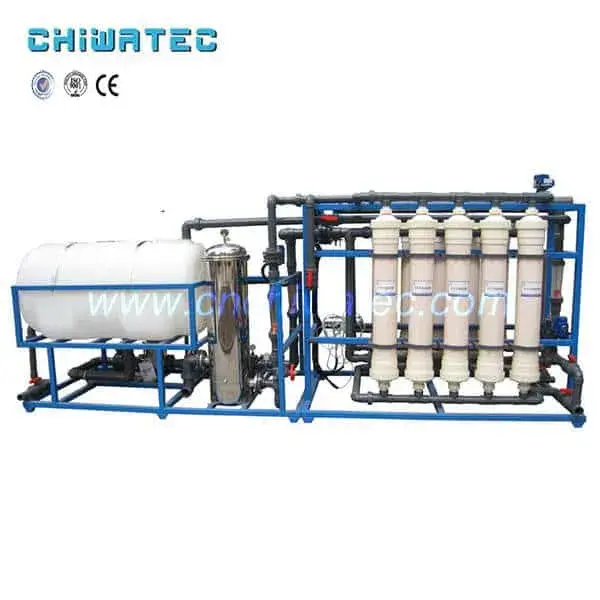
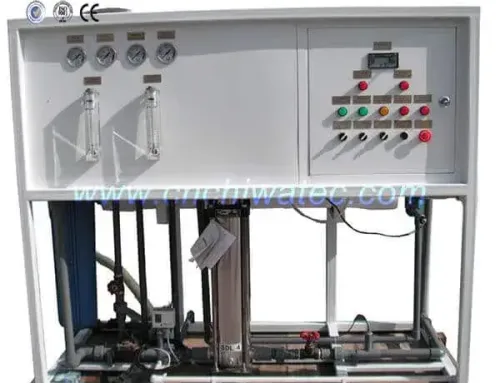
A properly designed UF chemical cleaning system includes: (1) CIP tank sized at 1.5-2.0 times the system volume (membrane modules + piping), typically constructed from polypropylene or FRP for chemical resistance; (2) CIP pump sized for 1.2-1.5 times the design permeate flow rate at 2-3 bar discharge pressure; (3) In-line heater or heat exchanger capable of maintaining 35-40 degrees C during recirculation; (4) Cartridge filter (5-50 micron) to remove particles released during cleaning and prevent re-deposition; (5) Chemical metering system for concentrated chemical injection; and (6) Automated valves and programmable logic controller for sequence automation.
System Sizing Guidelines
For a typical UF system processing 100 m3/day (~70 L/min design flow), the CIP system requires: tank volume of 200-300 liters, pump capacity of 80-100 L/min at 2-3 bar, heater capacity of 5-10 kW, and cartridge filter housing sized for the CIP flow rate. The CIP system should be designed for both forward and reverse flow directions, allowing cleaning solution to reach all membrane fibers uniformly. Ultrafiltration membrane industrial applications: comprehensive guide provides system design parameters for different UF configurations and applications.
5. What Chemicals Are Compatible with Common UF Membrane Materials?
Membrane Material Chemical Resistance
Membrane Material — pH Range — Max Cl2 (mg/L) — Max Temp — Compatible Cleaners
PVDF (Polyvinylidene fluoride) — 2-11 — 2000 — 45 degrees C — NaOH, NaClO, citric acid
PES (Polyethersulfone) — 1-13 — 200 — 50 degrees C — NaOH, citric acid, oxalic acid
PS (Polysulfone) — 1-13 — 200 — 50 degrees C — NaOH, citric acid
PAN (Polyacrylonitrile) — 2-10 — 50 — 40 degrees C — Mild alkali, enzymes
Ceramic — 0-14 — Unlimited — 80+ degrees C — Any chemical
Chemical Compatibility Verification
Always verify chemical compatibility with the specific membrane manufacturer’s guidelines before designing a cleaning protocol. PVDF membranes offer the broadest chemical resistance and are the preferred material for applications requiring aggressive cleaning. Ceramic membranes offer unlimited chemical compatibility but at 3-5x higher capital cost. For polymeric membranes, exceeding maximum chlorine concentration or temperature limits can cause irreversible membrane degradation.
6. How to Monitor and Evaluate Chemical Cleaning Effectiveness?
Key Performance Indicators
Cleaning effectiveness should be evaluated using: (1) TMP recovery — post-CIP TMP compared to pre-CIP TMP, with effective cleaning achieving 85-95% recovery to baseline; (2) Specific flux recovery — normalized permeate flux at standard temperature (20 degrees C), with target recovery above 90% for combined alkaline + acid CIP; (3) Permeate water quality — turbidity and SDI returned to design values post-cleaning; (4) Cleaning interval trend — the time between CIP events should remain stable or gradually decrease; a sudden decrease indicates a process upset or feed water quality change requiring investigation.
Troubleshooting Poor CIP Results
If CIP does not restore TMP to expected levels, investigate: insufficient chemical concentration (verify dosing and temperature), wrong chemical selection (conduct foulant autopsy analysis), inadequate contact time, or chemical decomposition (sodium hypochlorite degrades rapidly at high temperature and pH). If TMP recovery after cleaning is consistently below 80%, consider adding a third cleaning step (e.g., surfactant or enzymatic cleaner) or investigating upstream pretreatment performance. Aplicações de ultrafiltração provides additional context on CIP optimization across different feed water quality conditions.
7. What Is the Difference Between CEB and CIP in UF Systems?
Scope and Frequency Comparison
Parameter — CEB (Chemically Enhanced Backwash) — CIP (Clean-in-Place)
Frequency — Daily to weekly — Monthly to quarterly
Duration — 20-60 minutes — 2-6 hours
Chemical concentration — Low (100-500 mg/L) — High (500-5000 mg/L)
Temperature — Ambient — 30-40 degrees C (heated)
Automation — Fully automated — Automated or semi-automated
Membrane removal — Not required — Not required
Flux recovery — 80-95% — 95-99%
Complementary Roles in UF Maintenance
CEB and CIP serve complementary roles. CEB performed daily or every few days removes reversible fouling before it consolidates, extending the interval between intensive CIP events. CIP restores membrane performance to near-design conditions by removing accumulated stubborn fouling that persists despite regular CEB. A well-optimized UF maintenance program uses both: CEB for routine maintenance and CIP for periodic deep cleaning. UF CEB dispersed cleaning system guide provides detailed CEB protocols that work in conjunction with the CIP system described in this guide.
8. What Safety Considerations Apply to UF Chemical Cleaning?
Chemical Handling Safety
CIP chemicals — particularly sodium hypochlorite (oxidizer) and acids — require strict safety protocols. Sodium hypochlorite must never be mixed directly with acids (generates toxic chlorine gas). CIP systems should have dedicated tanks and piping for alkaline/oxidant and acid solutions, with separate injection points. The CIP area requires chemical-resistant secondary containment, eyewash stations, emergency showers, and gas detection for chlorine release monitoring.
Waste Management
Spent CIP solutions must be neutralized before disposal. Chlorine residual in spent alkaline/oxidant solution should be reduced below 1 mg/L using sodium bisulfite or dechlorination agents. Acidic or alkaline spent solutions should be neutralized to pH 6-9. For facilities with high CIP frequency, spent chemical neutralization and discharge monitoring should be automated. Where sewer discharge is not permitted, spent CIP solutions may require collection and off-site disposal as chemical waste. CHIWATEC provides complete UF system designs incorporating all required safety features for compliant CIP operation.
9. How to Optimize Chemical Cleaning Costs?
Chemical Consumption Reduction Strategies
Optimizing chemical cleaning costs involves: (1) performance-based scheduling — clean based on TMP triggers rather than fixed intervals, reducing unnecessary cleaning events by 20-40%; (2) chemical recovery and reuse — reclaiming spent alkaline cleaner for the initial flush of subsequent CIP cycles, reducing fresh chemical consumption by 15-25%; (3) optimized concentration — gradually reducing chemical dosage while monitoring TMP recovery to find the minimum effective concentration; and (4) temperature optimization — balancing heating energy cost against chemical dosage reduction.
Total Cost Analysis
The total annual cost of UF chemical cleaning typically represents 5-15% of total UF system operating costs, with chemical consumption (35-45%), energy for heating (20-30%), labor (15-20%), and waste disposal (10-15%) as the main components. A well-optimized CIP program can reduce annual chemical cleaning costs by 25-40% compared to fixed-interval, standard-concentration protocols while maintaining or improving membrane performance and lifespan. Ultrafiltration water treatment systems: complete guide to UF membrane technology provides comprehensive operating cost analysis for UF systems across different configurations and applications.
10. What Future Developments Will Shape UF Chemical Cleaning?
Smart CIP with Real-Time Optimization
The next generation of UF chemical cleaning systems incorporates machine learning that analyzes TMP trends, flux decline rates, feed water quality data, and historical cleaning effectiveness to dynamically optimize chemical dosing, temperature, and CIP frequency. Early adopters of adaptive CIP control report 30-45% reduction in chemical consumption and 20-30% extension of membrane lifespan compared to conventional fixed-interval CIP programs.
Sustainable Cleaning Innovations
Research into ultrasound-assisted cleaning — applying ultrasonic energy during CIP to enhance foulant detachment — has demonstrated 15-25% improved flux recovery at reduced chemical concentrations in pilot studies. Electrochemical cleaning methods that generate cleaning agents in-situ using electrode arrays within the membrane module are in early commercialization stages, promising chemical-free UF cleaning for specific applications. These innovations, combined with advanced membrane materials inherently resistant to fouling, will continue to reduce the chemical cleaning burden on UF system operators. CHIWATEC offers UF system upgrades incorporating advanced CIP automation and monitoring for existing installations.
Conclusão
A well-designed UF chemical cleaning (CIP) system is essential for maintaining membrane performance, achieving design membrane lifespan, and controlling operating costs. From alkaline/oxidant cleaning for organic fouling removal to acid cleaning for inorganic scale dissolution, the cleaning protocol must be matched to the dominant foulant type and membrane material. TMP-triggered performance-based scheduling, temperature optimization at 30-40 degrees C, and proper system sizing ensure effective cleaning with minimal chemical consumption. Combined with regular CEB (daily-to-weekly), a comprehensive UF maintenance program maximizes membrane productivity and minimizes lifecycle costs. Contact CHIWATEC today to discuss your UF system cleaning requirements. Our engineering team specializes in integrating CIP systems with advanced automation and monitoring for optimal membrane performance. Reach us at [email protected] ou [email protected], or via WhatsApp at 008618292684865.
Frequently Asked Questions
Q1: How often should UF membranes undergo chemical cleaning (CIP)?
CIP frequency depends on feed water quality and fouling rate. For surface water treatment, CIP every 1-3 months is typical; for wastewater reuse, every 2-6 weeks; for groundwater with good pretreatment, every 3-6 months. The most reliable trigger is TMP-based: CIP when post-backwash TMP exceeds 80-100% of clean-water baseline TMP.
Q2: Can CEB replace CIP for UF membrane maintenance?
No. CEB addresses reversible fouling at higher frequency (daily to weekly) with lower chemical intensity, while CIP targets accumulated, stubborn fouling at lower frequency (monthly to quarterly) with higher chemical concentration and temperature. Both are necessary — CEB extends intervals between CIP events, while CIP restores membrane performance to near-design conditions.
Q3: What is the most common cause of poor CIP results?
The most common causes are: (1) incorrect chemical selection for the dominant foulant type, (2) insufficient chemical concentration due to dosing pump calibration errors, (3) inadequate contact time or recirculation flow rate, (4) low cleaning temperature (below 25 degrees C), and (5) chemical degradation — particularly sodium hypochlorite which decomposes rapidly at elevated temperature and pH.
Q4: Can different membrane materials use the same CIP chemicals?
No. CIP chemical compatibility varies significantly by membrane material. PVDF membranes can tolerate up to 2000 mg/L free chlorine, while PES/PS membranes are limited to 200 mg/L. Ceramic membranes offer unlimited chemical compatibility. Always consult the membrane manufacturer’s chemical resistance guide before designing a CIP protocol.
Q5: How do heated CIP systems compare to ambient-temperature cleaning?
Heated CIP systems operating at 35-40 degrees C achieve 40-60% better flux recovery for organic-fouled membranes compared to ambient-temperature cleaning (15-25 degrees C). The heating energy cost (typically USD 0.05-0.15 per CIP event for a 100 m3/day system) is offset by reduced chemical consumption and shorter cleaning duration.
Related Resources and Further Reading
- UF CEB cleaning system: complete guide to chemically enhanced backwash
- Processo de membrana de ultrafiltração na aplicação de tratamento de água
- Aplicações de ultrafiltração
- Ultrafiltration membrane industrial applications: comprehensive guide
- UF water purification equipment — CHIWATEC ultrafiltration systems
Você tem um projeto de tratamento de água que podemos ajudar
* Projetar, usinar, instalar, comissionar, personalizar e serviço de balcão único
 Portuguese
  English
  Spanish