Technical Specifications and Installation Guide for Water Softeners
Understanding Water Softeners
Water softeners are devices designed to reduce water hardness by removing calcium and magnesium ions. While they effectively soften water, they do not reduce the total salt content in the water.
1. Working Principle of Water Softening Equipment
The hardness of water is primarily due to the presence of calcium (Ca²⁺) and magnesium (Mg²⁺) ions. A water softener typically uses a cation exchange resin to replace these ions with sodium (Na⁺) ions, which do not form scale.
- Ion Exchange Process:
- Raw water passes through the sodium-based cation exchange resin.
- Ca²⁺ and Mg²⁺ ions in the water are exchanged with Na⁺ ions on the resin.
- Over time, the resin becomes saturated with Ca²⁺ and Mg²⁺ ions and loses its effectiveness.
- The resin is regenerated by flushing with a brine solution, which replaces the Ca²⁺ and Mg²⁺ ions with Na⁺ ions, restoring the resin’s capacity to soften water.
2. Applications of Water Softening Equipment
Water softeners are widely used in various systems and industries, including:
- Steam Boilers and Hot Water Boilers: To prevent scale buildup.
- Heat Exchangers and Evaporative Condensers: For efficient heat transfer.
- Air Conditioning Systems: To enhance performance and longevity.
- Domestic Applications: Hotels, restaurants, offices, apartments, and households.
- Aplicações industriais: Food and beverage production, brewing, laundry services, dyeing, chemical manufacturing, and pharmaceuticals.
Technical Specifications of Water Softeners
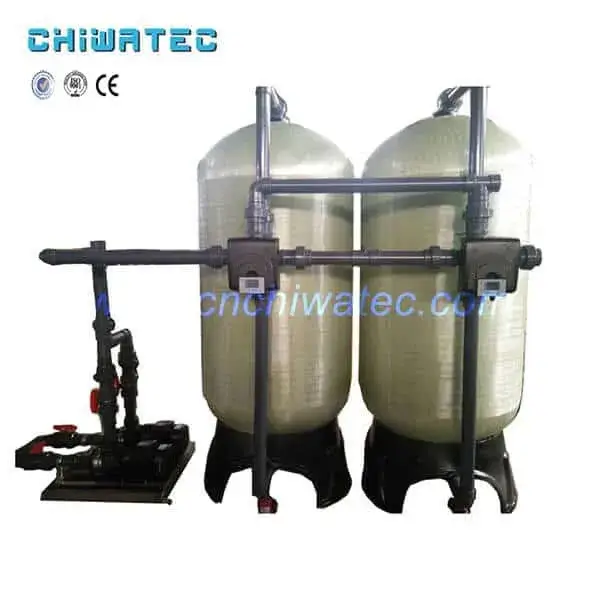
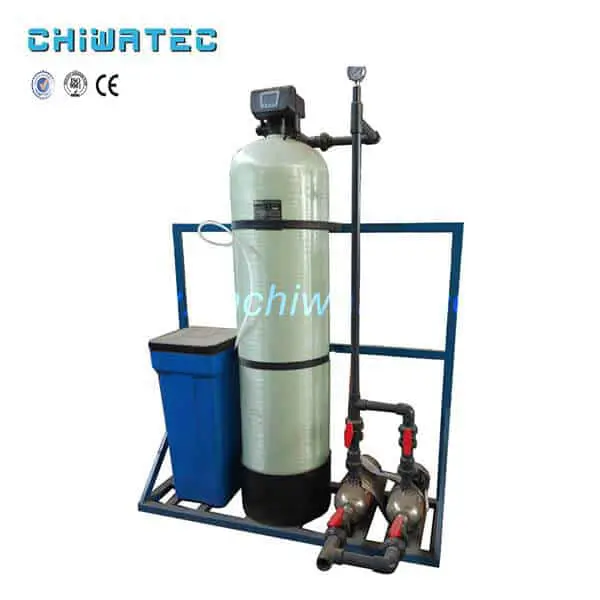
Fully Automatic Sodium Ion Exchanger (Automatic Boiler Water Softener) Parameters:
- Water Supply Pressure: 0.2-0.6 MPa
- Pressure Drop: 0.03-0.06 MPa
- Exchange Capacity: 1200 mol/m³ (H⁺1)
- Resin Model: 001 × 7
- Power Supply: 220V ± 10%
- Power Consumption: 5W-30W
- Salt Consumption for Regeneration: <150 g/L
- Water Consumption for Regeneration: <3%
- Ambient Temperature: 2-50 °C
- Turbidez: <3
- Influent Water Quality: [Cl] <0.3 mg/L, Iron Ions <0.3 mg/L
- Control Method: Flow-based or Time-based
- Regeneration Method: Co-flow or Counter-flow Regeneration
- Arrangement: Primary and Auxiliary Controllers
- Operation: Fully Automatic Program Control
Installation Considerations for Water Softeners
- Foundation: No foundation is required; can be installed on a level surface.
- Drenagem: Ensure there is a drainage outlet nearby for waste discharge.
- Water Pressure: If the inlet water pressure is lower than required, install a booster pump.
- Check Valves: Install check valves on the softened water pipeline connected to heating devices to prevent backflow of hot water.
- Salt Solution: Maintain a saturated salt solution in the brine tank, with solid salt above the water level.
- Pipe Flushing: Flush the pipes after installation to prevent blockages and resin contamination.
- Water Source Data: Provide raw water pressure, flow rate, water quality data, and usage conditions to select the appropriate water softener model.
Using a Water Softener
Water softeners use ion exchange technology, where functional ions on the resin exchange with calcium and magnesium ions in the water, thereby softening it.
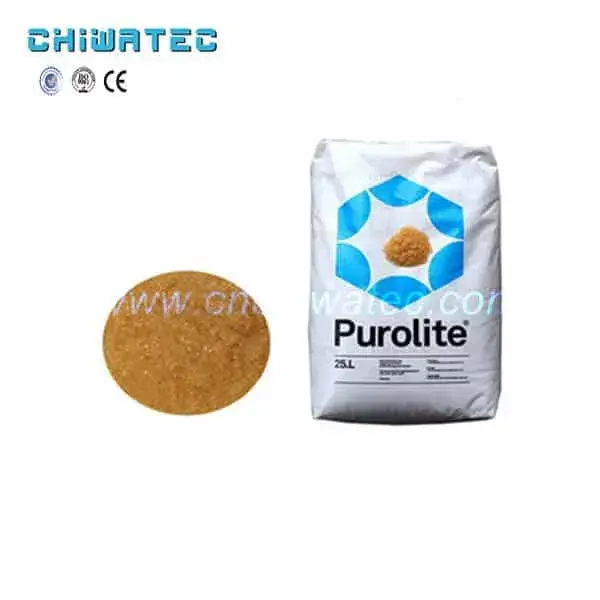
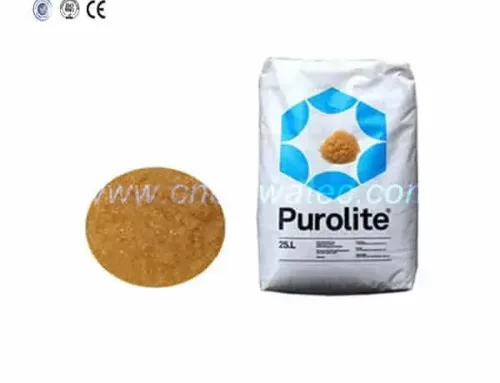
- Resin Composition: Softening resins are synthetic ion exchange materials with sodium ions that react with dissolved calcium and magnesium ions, preventing scale formation.
- Regeneration: The resin is regenerated using a dilute solution of sodium chloride (brine). This process displaces calcium and magnesium ions from the resin, allowing it to resume its softening function.
Conclusão
By understanding the technical specifications and proper installation procedures, you can optimize the performance of your water softener, ensuring consistent production of soft water for various applications. For tailored recommendations and installation support, consult with a water treatment specialist.
Xi'an CHIWATEC A Water Treatment Technology é uma empresa de alta tecnologia especializada em vários dispositivos de processamento de água. Além desses produtos individuais, que abrangem vários tipos e séries, também podemos ajudar com projetos de engenharia abrangentes relacionados. Graças ao nosso trabalho árduo e dedicação desde a nossa fundação, somos agora um dos fabricantes de equipamentos de tratamento de água com desenvolvimento mais rápido na China Ocidental.
Leitura adicional
- A Comparison Between Traditional Water Softeners and Fully Automatic Water Softeners
- Quais são os tipos comuns de amaciadores de água
- Introdução às vantagens dos amaciadores de água automáticos, amaciadores de água e equipamentos de amaciamento de água
- Notas sobre a seleção de amaciadores de água automáticos
- Understanding the Unique Benefits of Combining Strong and Weak Ion Exchange Resins in Water Desalination
SIGA-NOS
Você tem um projeto de tratamento de água que podemos ajudar
* Projetar, usinar, instalar, comissionar, personalizar e serviço de balcão único
 Portuguese
  English
  Spanish