UV Sterilizer Technical Requirements: Complete Guide to GB Standards and Specifications 2026
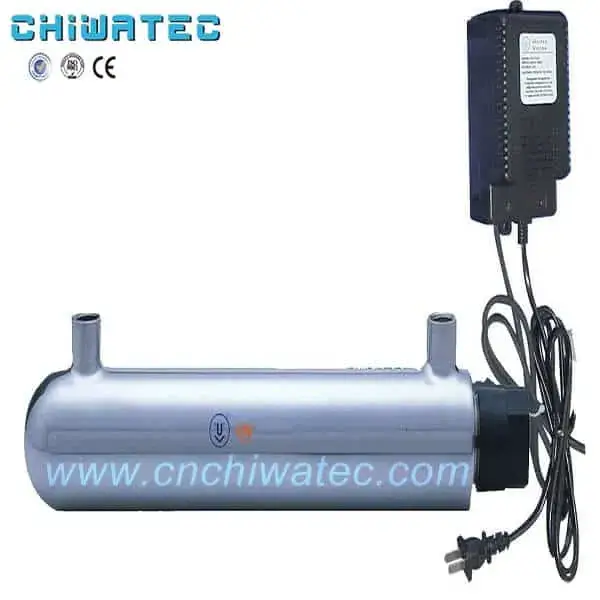
Understanding the UV sterilizer technical requirements is essential for manufacturers, engineers, and procurement professionals who need to specify, design, or select ultraviolet disinfection equipment that complies with national standards. From GB 8988 safety requirements to pressure vessel specifications, quartz sleeve transmittance thresholds, and electrical compliance — this guide covers the complete technical framework for UV sterilizers used in water treatment applications.
UV Sterilizer Technical Requirements: Design and Safety Standards
All UV sterilizers must be designed and manufactured according to approved technical drawings and documented specifications. The design process must comply with GB 8988 — Safety Requirements for Household and Similar General Purpose Electronic and Related Equipment Powered by Grid Power. Key design requirements include:
- Approved documentation — Sterilizers must be manufactured per drawings and technical documents approved by the relevant technical management regulations. Any deviation requires formal re-approval.
- Interchangeability — All parts of the same type of sterilizer must ensure full interchangeability, allowing field replacement without custom fitting or modification. This applies to lamp assemblies, quartz sleeves, ballasts, and sealing components.
- UV-irradiated surface finish — The UV-irradiated interior surface of the sterilizer must be polished to maximize UV reflection and ensure uniform radiation distribution across the treatment zone.
- Lamp arrangement — The arrangement of UV lamp tubes must ensure uniform ultraviolet intensity distribution on the irradiated surface, avoiding dead zones where microorganisms may survive due to insufficient UV dose.
These foundational requirements ensure that every UV sterilizer entering service meets minimum safety and performance benchmarks.
Pressure Vessel and Mechanical Requirements
The pressure-bearing components of UV sterilizers are subject to specific mechanical standards that govern safe operation:
| Parâmetro | Requirement | Standard Reference |
| Working pressure | ≥ 0.60 MPa | GB pressure vessel code |
| Test pressure | ≥ 0.90 MPa (1.5x working pressure) | GB pressure vessel code |
| Flow deflector | Must be installed inside cylinder or box | Equipment design specification |
| Quartz sleeve transmittance | > 85% at 253.7 nm | YY/T 0160 |
| Lamp-water separation | Lamp separated from water by quartz glass sleeve | Safety design requirement |
The test pressure of 0.90 MPa represents a 50 percent safety margin above the working pressure, ensuring the vessel can withstand operational pressure fluctuations without risk of failure. The quartz sleeve transmittance threshold of 85 percent at 253.7 nm is critical — below this value, UV energy delivery to the water is insufficient for effective microbial inactivation.
UV Lamp and Quartz Sleeve Specifications
The UV lamp and its protective quartz sleeve are the core functional components of any sterilizer. Their specifications directly determine disinfection performance:
- Lamp type — Straight tube quartz ultraviolet low-pressure mercury lamps must comply with YY/T 0160: “Straight Tube Quartz Ultraviolet Low-Pressure Mercury Disinfection Lamps.” This standard governs lamp dimensions, electrical characteristics, UV output, and life expectancy.
- Quartz sleeve transmittance — The quartz sleeve must have a UV transmittance greater than 85 percent at 253.7 nm. Sleeves with degraded transmittance due to fouling or solarization must be replaced to maintain disinfection efficacy.
- Low-ozone lamps for sensitive environments — When the installation environment requires minimal ozone exposure, low-ozone lamps should be selected to reduce environmental ozone pollution while maintaining effective UV output at 253.7 nm.
- UV intensity distribution — The lamp arrangement must be designed to achieve uniform UV intensity on the irradiated surface. Uneven distribution creates low-dose zones where bacteria, viruses, and protozoa may survive.
Regular measurement of UV intensity at the quartz sleeve surface is recommended as part of ongoing maintenance to verify that lamp output and sleeve transmittance remain within specification.
Electrical and Monitoring System Requirements
UV sterilizers must incorporate specific electrical and monitoring features to ensure safe operation and provide operators with real-time performance visibility:
| Component/Feature | Requirement | Purpose |
| Low-voltage electrical components | Must meet corresponding product technical requirements | Ensure electrical safety and reliability |
| Lamp lighting indication | Visual indicator showing lamp is energized | Confirm lamp operation at a glance |
| Cumulative lighting time indicator | Display total lamp operating hours | Schedule lamp replacement at end of rated life |
| UV radiation intensity indication | Relative or absolute UV intensity display | Monitor lamp degradation and sleeve fouling |
| Quartz sleeve UV transmittance | > 85% at 253.7 nm (monitored) | Verify UV energy delivery to water |
The cumulative lighting time indicator is essential for maintenance planning — UV lamps have a rated service life (typically 8,000-12,000 hours for low-pressure mercury lamps), after which UV output declines below effective levels even if the lamp still produces visible light.
Installation, Piping, and Sampling Requirements
Proper installation is critical for UV sterilizer performance. The following requirements govern the physical integration of the sterilizer into the water treatment system:
- Inlet and outlet pipes — The sterilizer must be fitted with designated inlet and outlet connections, clearly marked for correct flow direction.
- Drain pipe — A drain pipe must be provided for system flushing and maintenance. Where direct drain pipe installation is impractical, a drain connection may be installed on the adjacent piping at the same elevation as the sterilizer.
- Sampling port — A sampling port must be provided to allow collection of treated water for microbiological and chemical analysis. Sample ports should be located downstream of the UV chamber and upstream of any post-treatment components.
- Flow direction — Water flow must be directed from bottom to top (or as specified by the manufacturer) to ensure complete chamber filling and prevent air pocket formation that would shield microorganisms from UV exposure.
Proper installation following these requirements ensures that the UV sterilizer operates at its intended performance level and that water quality can be verified through routine sampling.
UV Sterilizer Technical Requirements at a Glance: Complete Specification Checklist
This comprehensive checklist summarizes all UV sterilizer technical requirements in a single reference table for design, procurement, and compliance verification:
| Category | Requirement | Standard/Value |
| Design compliance | Manufactured per approved drawings and technical documents | Technical management regulations |
| Safety standard | Compliance with grid-powered equipment safety requirements | GB 8988 |
| Part interchangeability | All same-type parts must be interchangeable | Design specification |
| Working pressure | ≥ 0.60 MPa | GB pressure vessel code |
| Test pressure | ≥ 0.90 MPa (1.5× working pressure) | GB pressure vessel code |
| Flow deflector | Installed inside cylinder or box | Design requirement |
| Lamp type | Straight tube quartz UV low-pressure mercury lamp | YY/T 0160 |
| Quartz sleeve transmittance | > 85% at 253.7 nm | YY/T 0160 |
| UV intensity distribution | Uniform on irradiated surface | Design requirement |
| Low-ozone lamps | Preferred for sensitive environments | Environmental requirement |
| Lamp indication | Lighting indicator + cumulative hours display | Monitoring requirement |
| UV intensity indication | Relative indicator recommended | Monitoring requirement |
| Electrical components | Meet corresponding product technical requirements | Electrical safety codes |
| Inlet/outlet/drain | Provided with proper connections | Installation requirement |
| Sampling port | Provided for water quality verification | Installation requirement |
Use this checklist during equipment procurement and commissioning to verify that all UV sterilizer technical requirements are met before the system enters service.
Frequently Asked Questions
What GB standards apply to UV sterilizers?
The primary standard is GB 8988 for grid-powered equipment safety. The UV lamp itself must comply with YY/T 0160 — Straight Tube Quartz Ultraviolet Low-Pressure Mercury Disinfection Lamps. Additional standards apply to pressure vessel design, electrical components, and material specifications depending on the specific application and jurisdiction.
What is the minimum quartz sleeve UV transmittance requirement?
The quartz sleeve must have UV transmittance greater than 85 percent at 253.7 nm. This threshold ensures sufficient UV energy passes through the sleeve to achieve effective microbial inactivation. Sleeves should be cleaned regularly and replaced when transmittance drops below 85 percent due to fouling or solarization.
What pressure ratings are required for UV sterilizer vessels?
The working pressure must be at least 0.60 MPa (approximately 87 psi), with a test pressure of at least 0.90 MPa (approximately 130 psi) — representing a 50 percent safety margin. These ratings ensure the vessel can safely withstand operational pressure fluctuations and meet pressure vessel code requirements.
Why is a cumulative lamp hour indicator important?
UV lamp output declines gradually over the lamp’s service life. A cumulative hour indicator allows operators to track total lamp operating time and schedule replacement before output falls below effective levels. Low-pressure mercury UV lamps typically require replacement after 8,000-12,000 hours of operation.
Can a UV sterilizer operate without a flow deflector?
No. The flow deflector is a required component that ensures all water passing through the sterilizer receives adequate UV exposure by preventing short-circuit flow and creating uniform hydraulic conditions. Operating without a deflector can create dead zones where untreated water bypasses the UV field.
Conclusion and Call to Action
Meeting all UV sterilizer technical requirements — from GB 8988 safety compliance and pressure vessel specifications to quartz sleeve transmittance and UV monitoring systems — is essential for reliable disinfection performance and regulatory compliance. Whether you are specifying equipment for a municipal water treatment plant, industrial process, or commercial facility, understanding these requirements ensures you select a sterilizer that will perform effectively over its intended service life.
CHIWATEC is a high-tech enterprise specialized in various water processing devices, including UV sterilizers and comprehensive water treatment systems. Our team can help you select, design, and install UV disinfection equipment that meets all applicable technical standards.
Contact us today to discuss your UV sterilization requirements:
E-mail: [email protected]
E-mail: [email protected]
Related Resources and Further Reading
- UV Sterilizer Guide 2026: How Ultraviolet Water Disinfection Works and Benefits
- UV Lamp Maintenance: Complete Guide to Ultraviolet Lamp Care and Replacement 2026
- UV Disinfection Benefits: 6 Key Advantages of Ultraviolet Water Treatment 2026
- UV Disinfection Applications and Comparative Economic Analysis 2026
- Browse UV Sterilizers — Product Range
Você tem um projeto de tratamento de água que podemos ajudar
* Projetar, usinar, instalar, comissionar, personalizar e serviço de balcão único

 Portuguese
  English
  Spanish