Pollution Control Methods for Reverse Osmosis (RO) Systems
Reverse osmosis (RO) systems play a vital role in water treatment but face common challenges, such as inorganic scaling, colloidal particle deposition, microbiological growth, and chemical fouling. These issues can impact system performance, efficiency, and longevity. Here, we outline effective methods to control pollution in RO systems and optimize their functionality.
1. Inorganic Scaling Control
Inorganic scaling occurs when salts like calcium (Ca²⁺), magnesium (Mg²⁺), barium (Ba²⁺), and strontium (Sr²⁺) ions concentrate on the RO membrane surface, forming hard deposits. In a typical RO system, the source water is concentrated fourfold, and the pH increases, which can precipitate less-soluble substances and form scale on the membrane surface. This leads to higher system pressure, reduced water production, and even membrane damage, reducing the system’s desalination efficiency.
Measuring Scaling Potential in RO Systems
To assess scaling potential, two key indices are used based on feed water type:
- Langelier Saturation Index (LSI) – For brackish water with a TDS ≤ 10,000 mg/L:LSI=pHC−pHS
- pHC: Concentrate water pH
- pHS: Saturation pH of calcium carbonate (CaCO₃)
- If LSI ≥ 0, calcium carbonate scaling is likely to occur.
- Stiff & Davis Saturation Index (S&DSI) – For high-salinity brackish or seawater with TDS > 10,000 mg/L:S&DSI = pHC – pHS
- Similar to LSI, a result of S&DSI ≥ 0 indicates a risk of scaling.
Control Strategies for Calcium Carbonate Scaling
Preventing CaCO₃ scaling is essential for maintaining RO efficiency. Here are common methods:
- Reduce Ca²⁺ Concentration: Lowering calcium levels in the water shifts the chemical balance, reducing the tendency for CaCO₃ to precipitate. Techniques include:
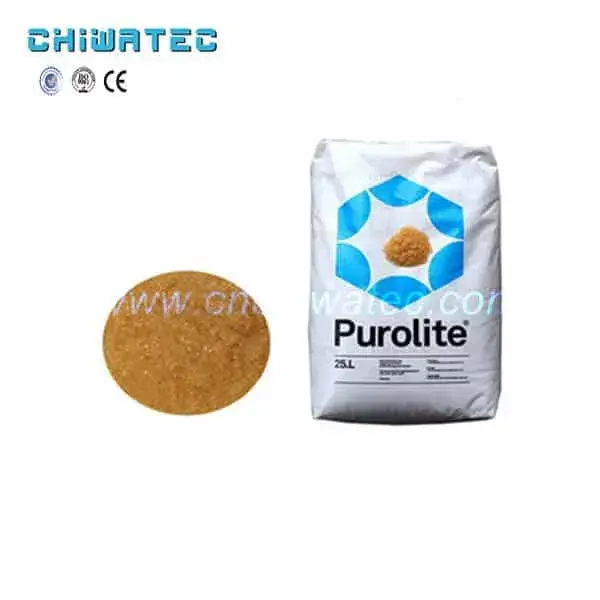
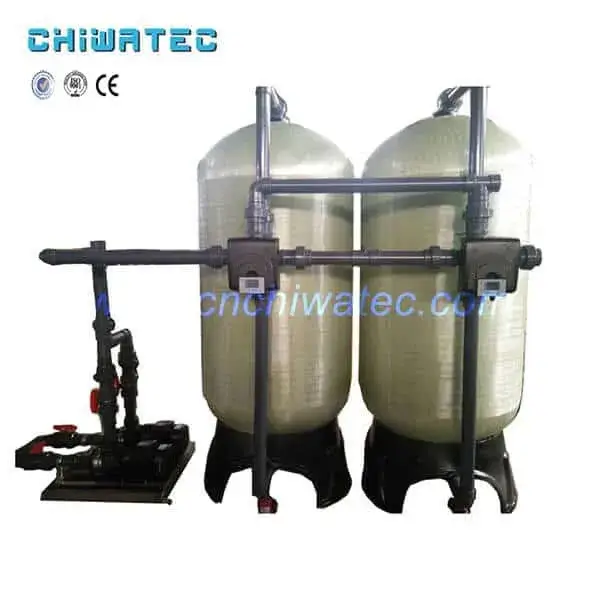
- Ion Exchange Softening: Replaces calcium and magnesium ions with sodium ions, which are less likely to form scale.
- Lime Softening: Adds lime to precipitate calcium as calcium carbonate before reaching the membrane.
- Electrodialysis and Nanofiltration: Effective for pre-treating feed water, decreasing the calcium concentration.
- Increase Ca²⁺ Solubility: Enhancing calcium solubility reduces scaling risk. This can be achieved by:
- Adding Chelating Agents or Antiscalants: These increase Ca²⁺ solubility and prevent crystal growth on the membrane.
- pH Adjustment: Lowering pH by adding inorganic acids increases H⁺ ion concentration, moving the chemical balance away from CaCO₃ formation. For instance:
- CO₂ + H₂O↔H₂CO₃↔H⁺ + HCO₃⁻↔H⁺ + CO₃²⁻
- Acid addition maintains a lower pH, favoring the formation of soluble bicarbonate instead of CaCO₃ precipitate.
- Magnetic Water Treatment: Though in early research stages, magnetic treatment may help control scaling by altering crystallization dynamics. More studies are needed to understand its efficiency fully.
2. Colloidal and Particulate Fouling Control
Colloidal particles, present in many water sources, can accumulate on the membrane surface and hinder RO performance. Common sources of colloidal fouling include suspended solids and organic matter.
Methods for Colloidal Control
- Pre-filtration: Using filters (1-5 microns) before RO can remove larger particles, reducing membrane fouling.
- Coagulants and Flocculants: Adding chemicals to coagulate or flocculate colloids aids in removing them before they reach the membrane.
- Regular Cleaning: Periodic cleaning with low-pressure, high-velocity water flushes helps remove particulate buildup.
3. Microbiological Fouling Control
Biofouling is caused by microorganisms such as bacteria forming a biofilm on the membrane. This issue can significantly reduce permeate flow and increase maintenance costs.
Microbiological Control Techniques
- Chlorination and Dechlorination: Pre-treating feed water with chlorine can kill bacteria. Dechlorination (with agents like sodium bisulfite) is essential afterward, as chlorine can damage RO membranes.
- UV Sterilization: Ultraviolet light treatment is a chemical-free option that inactivates bacteria before they reach the RO membrane.
- Biocide Treatment: Periodic application of non-oxidizing biocides helps maintain microbial control within the system.
4. Chemical Fouling Control
Chemical fouling may result from various contaminants such as heavy metals, iron, or oxidants. Effective chemical management minimizes these fouling issues.
Control Measures for Chemical Fouling
- Chemical Pretreatment: Iron and manganese oxidation and precipitation can be managed by adjusting pH or using oxidizing agents.
- Oxidant Removal: If oxidants like chlorine are present in feed water, using reducing agents before reaching the membrane prevents chemical damage.
Conclusão
Reverse osmosis systems are critical for water treatment, but managing scaling, fouling, and microbial growth is essential for optimal performance and longevity. By implementing these pollution control methods, operators can improve RO system efficiency, reduce maintenance costs, and ensure a stable water supply.
Xi'an CHIWATEC A Water Treatment Technology é uma empresa de alta tecnologia especializada em vários dispositivos de processamento de água. Além desses produtos individuais, que abrangem vários tipos e séries, também podemos ajudar com projetos de engenharia abrangentes relacionados. Graças ao nosso trabalho árduo e dedicação desde a nossa fundação, somos agora um dos fabricantes de equipamentos de tratamento de água com desenvolvimento mais rápido na China Ocidental.
Leitura adicional
SIGA-NOS
Você tem um projeto de tratamento de água que podemos ajudar
* Projetar, usinar, instalar, comissionar, personalizar e serviço de balcão único
 Portuguese
  English
  Spanish